
Skip to content

7 Tips for Choosing the Best Felt Underlay

Choosing the right Felt Underlay can change how a floor feels, sounds, and performs. It may sit beneath the surface, but its influence is easy to notice. Softer footsteps. Fewer cold spots. Better carpet recovery after heavy furniture.

Market research supports this practical view. Grand View Research identifies rising demand for flooring underlayments that improve comfort, insulation, and floor durability. Its 2024 flooring underlayment analysis also highlights renovation activity and acoustic performance as important market drivers. These findings matter in real rooms, not only in spreadsheets. A hallway with daily foot traffic needs different support from a quiet guest bedroom.

Martin Cummins, a flooring technical specialist associated with Ball & Young, offers a useful reminder: “Underlay is the foundation of carpet performance.” That foundation must match the carpet, subfloor, room usage, and installation method. Thickness alone is not enough. Density, moisture resistance, thermal insulation, and compression recovery deserve equal attention. Sometimes, the cheapest roll feels acceptable on day one. It may flatten sooner than expected.

This guide presents seven practical tips for choosing the best Felt Underlay. It considers room traffic, carpet type, sound control, moisture exposure, sustainability, and installation quality. Product labels can be confusing. Even experienced buyers can miss small differences between specifications. Check the technical sheet. Ask about testing standards. Measure twice. A careful choice usually costs less than replacing a tired floor prematurely.
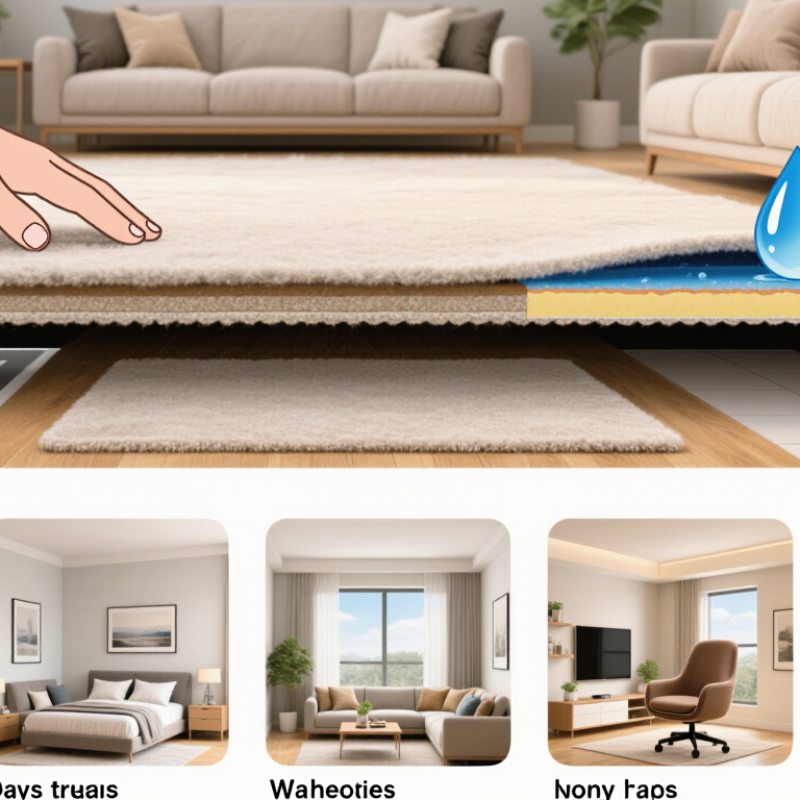
7 Tips for Choosing the Best Felt Underlay

Define the Purpose and Performance Needs of Felt Underlay

7 Tips for Choosing the Best Felt Underlay

Define the Purpose and Performance Needs of Felt Underlay

Felt underlay should solve a specific flooring problem, not simply fill empty space. Decide whether you need sound reduction, thermal insulation, cushioning, or surface protection. A bedroom may benefit from softer footfall control. A busy hallway needs stronger compression resistance. Underlay beneath furniture also faces repeated pressure every day.

Measure the room and inspect the subfloor before choosing a material. Uneven concrete, timber joints, or slight dampness can change performance significantly. Check thickness, density, moisture tolerance, and compression recovery on the technical sheet. A thicker layer is not always better. It can make flooring unstable or create problems near doors.

I have seen soft underlay feel comfortable at installation, then flatten beneath a desk within months. That mistake changed how I assess materials. I now press samples by hand, bend them, and compare their recovery after several minutes. It is not a laboratory test. Still, it reveals useful differences. Consider the floor covering too, because carpet, laminate, and engineered wood require different support. Performance claims should match recognised testing methods and local installation requirements. Ask for clear documentation when figures seem vague.

Compare Felt Materials, Thicknesses, and Density Options

Choosing felt underlay requires more than selecting the thickest option. Wool felt offers strong resilience and a firm, natural feel, while recycled polyester felt usually provides consistent thickness and moisture resistance. Blended fibers can balance softness and recovery, but their performance depends on fiber length, bonding, and compression. Ask for technical sheets, not only sample pieces.

Density controls how well felt supports flooring under repeated pressure. Carpet Cushion Council guidance commonly places residential cushion near 7/16 inch, with density around 6–8 lb/ft³, or approximately 96–128 kg/m³. High-traffic areas often perform better with about 3/8 inch and 8 lb/ft³ or higher. Thicker is not automatically better. Excessively soft underlay may allow carpet seams to move and furniture legs to leave deeper impressions. A small mistake here can become visible every day.

For acoustic claims, request laboratory results using recognized methods, such as ASTM E492 and E989 for impact sound ratings. These ratings describe the complete floor assembly, not the felt alone. Compare thickness, density, compression recovery, and moisture behavior together. In a hallway, I would favor firmer felt with stable recovery. In a bedroom, slightly softer material may feel more comfortable. Installation quality still matters. Uneven subfloors can defeat expensive underlay, and product data rarely captures every real-world condition.

Check Compatibility with Your Flooring and Installation Method

7 Tips for Choosing the Best Felt Underlay

Check Compatibility with Your Flooring and Installation Method

Felt underlay is not universally suitable. Match its thickness, density, and backing to the floor above it. For floating laminate or engineered wood, choose a stable underlay that resists compression and does not block click joints. The National Wood Flooring Association recommends keeping wood moisture levels within four percentage points of the subfloor. An overly soft felt layer can hide moisture problems, but it cannot solve them.

Vinyl flooring needs extra care. Some felt products lack the required smoothness or dimensional stability for resilient flooring. Check the flooring manufacturer’s installation instructions before using any underlay. ASTM F970 evaluates residual indentation under controlled static loading, which matters beneath heavy furniture. A felt layer that recovers poorly may leave visible dents around a sofa or cabinet.

Installation method changes the decision. Nail-down floors usually need a thin, breathable layer, while floating floors require controlled compression and a continuous surface. For tile, standard felt is often unsuitable because tile assemblies need rigid, load-distributing support. ISO 10140 acoustic testing also shows why laboratory ratings cannot predict every room. Subfloor gaps, wall contact, and poor cutting can reduce real-world performance. I have seen installers choose thicker felt for comfort, then discover unstable joints. Thicker is not always better. Check the technical sheet, test a small area, and reconsider the choice when the floor feels springy.

7 Tips for Choosing the Best Felt Underlay - Check Compatibility with Your Flooring and Installation Method
Tip Decision Area What to Check Suitable Application Key Benefits Important Caution
1 Match the Flooring Type Confirm whether the underlay is approved for carpet, laminate, engineered wood, solid wood, vinyl, or another floor covering. Carpet and floating wood-based floors commonly use felt underlay, subject to the flooring manufacturer's instructions. Improves comfort, reduces impact noise, and helps smooth minor surface irregularities. Do not use a soft underlay beneath flooring that requires a firm, stable base unless the installation instructions allow it.
2 Choose the Correct Installation Method Identify whether the floor will be installed by floating, full-spread adhesive, perimeter fixing, tack strip, or direct glue-down installation. Floating floors generally require a stable, correctly compressed underlay; direct-glue installations often require a compatible low-profile system or no separate underlay. Supports proper floor movement, reduces installation problems, and helps maintain joint integrity. Never place a loose underlay beneath a floor that must be bonded directly to the subfloor.
3 Verify Thickness and Density Compare the product's thickness, density, compression resistance, and long-term recovery with the flooring requirements. A denser felt is typically better for areas with frequent foot traffic, while thickness should remain within the floor system's permitted range. Balances cushioning with load support and helps reduce premature crushing. An excessively thick or soft layer can cause movement, unstable joints, or damage to click-lock connections.
4 Check Moisture Protection Assess the subfloor moisture level and determine whether a separate vapor-control layer is required. Concrete subfloors may require a compatible moisture barrier beneath floating wood-based flooring, depending on the flooring system and site conditions. Helps protect moisture-sensitive floor materials from subfloor vapor transmission. Felt alone should not be assumed to provide a vapor barrier. Moisture testing and the correct barrier specification are essential.
5 Consider Acoustic Requirements Review impact-sound reduction, airborne-sound performance, and any building or project acoustic targets. Use an underlay with tested acoustic values when installing flooring in apartments, offices, bedrooms, or rooms below occupied spaces. Can reduce footfall noise and improve the perceived acoustic comfort of the room. Acoustic ratings depend on the complete floor assembly, including the subfloor, floor covering, underlay, and installation method.
6 Evaluate Subfloor Conditions Inspect the subfloor for cleanliness, dryness, levelness, cracks, loose sections, and protruding fasteners. Felt underlay is suitable for minor surface variation only; significant unevenness should be corrected before installation. Promotes a more even walking surface and reduces localized stress on the floor covering. Underlay cannot replace structural repairs, leveling compound, or subfloor preparation where these are required.
7 Confirm Safety and Site Conditions Check fire performance, indoor-air requirements, temperature range, radiant-heating compatibility, and installation-area exposure. For rooms with underfloor heating, choose a thin, thermally suitable underlay and verify the combined thermal resistance of the entire floor assembly. Supports safe use, predictable heat transfer, and compliance with project specifications. Avoid blocking required expansion gaps, vents, drains, or access points, and follow the documented installation instructions.

Evaluate Moisture Resistance, Insulation, and Sound Reduction

7 Tips for Choosing the Best Felt Underlay

Moisture resistance should be checked before insulation or comfort.

Examine the underlay’s moisture rating and installation instructions carefully. A concrete subfloor may release hidden vapor, even when it feels dry. Use a moisture meter when possible, and repair leaks before installation. A moisture barrier can help, but it cannot correct a damp floor. I have seen beautiful flooring fail because this step was rushed.

Insulation depends on thickness, density, and the floor beneath it.

Thicker felt often feels warmer, but excessive thickness may affect flooring stability. Compare the product’s thermal resistance value rather than relying on touch alone. Check whether it suits wood, laminate, or carpet flooring. Leave the material indoors before fitting it. This allows it to adjust to room temperature and humidity. Still, acclimation is not magic. Poor ventilation can create problems later.

Sound reduction requires careful interpretation.

Impact noise means footsteps and dropped objects, while airborne noise includes voices and television sounds. Look for test data covering both types. A dense felt underlay may soften footfall noise, but it will not block every sound. Check seams, edges, and gaps during installation. Small openings can reduce performance noticeably. I once underestimated furniture movement, which exposed a weakness in the chosen underlay. A short sample test can reveal more than a confident product description.

Balance Product Quality, Lifespan, and Overall Cost

7 Tips for Choosing the Best Felt Underlay

Balance Product Quality, Lifespan, and Overall Cost

The cheapest felt underlay can become expensive after repeated compression. Check seven details: fiber density, thickness, recovery, moisture resistance, acoustic performance, installation fit, and warranty terms. A thicker layer is not automatically better. If it feels soft but collapses under a chair, its useful life may be short. The Carpet Cushion Council’s technical guidance emphasizes density and resilience, not thickness alone, when evaluating underlay performance.

Match the underlay’s expected life with the floor covering. The National Association of Home Builders’ Life Expectancy of Home Components study places typical carpet life around 8–10 years. An underlay that loses structure after three years creates waste and extra labor. Ask for compression testing, declared density, and recovery results. These figures are more useful than vague claims such as “premium quality.” I have seen projects choose recycled felt for sustainability, then overlook moisture near entrances. That was a costly and avoidable mistake.

Calculate whole-life cost, not only the purchase price. Include delivery, cutting waste, installation time, replacement, and disposal. Felt can also improve warmth and sound control, but performance depends on the room and subfloor. The U.S. Energy Information Administration’s 2020 Residential Energy Consumption Survey found that space heating represented about 42% of household energy use. Underlay may support comfort, but it should not be sold as a guaranteed energy-saving solution. Leave room for doubt, and request test data before paying more.

7 Tips for Choosing the Best Felt Underlay — Balance Product Quality, Lifespan, and Overall Cost

Indicative comparison of generic felt underlay quality tiers. Higher-quality products typically have greater durability and a higher initial cost, but their longer service life can reduce the annualized cost of ownership.

Planning ranges shown for comparison only. Actual performance depends on fiber composition, density, thickness, moisture exposure, installation conditions, flooring type, and traffic level.

Selection checklist: verify thickness and density, check acoustic and thermal performance, confirm moisture resistance, review compression recovery, match the underlay to the flooring system, compare warranty and expected service life, and calculate total cost over the intended use period.

Article Source:

Back To Top