
Skip to content

How to Choose a Metal Irregular Nozzle in 2026?

Choosing a Metal Irregular Nozzle in 2026 requires more than comparing catalog dimensions. The correct choice depends on spray geometry, alloy compatibility, pressure stability, temperature, and cleaning conditions. A nozzle may look precise on paper, yet produce uneven coverage when the liquid contains abrasive particles or changes viscosity. That practical gap matters.

Professor Arthur Lefebvre, a leading authority on atomization, wrote, “The atomization process is one of the oldest and most widely used methods of producing a spray.” His observation remains relevant when evaluating a Metal Irregular Nozzle. Spray formation is never controlled by shape alone. Fluid behavior and operating conditions also influence the final pattern. Engineers should review droplet size, flow rate, impact angle, and wear resistance together. Stainless steel may suit corrosive environments, while hardened alloys can better withstand abrasive service. Neither option is automatically superior.

Small details decide performance.

This guide examines how to match irregular outlet geometry with real production demands in 2026. It considers CNC accuracy, surface finish, pressure loss, thermal expansion, and maintenance access. It also addresses a common mistake: selecting a nozzle from a drawing without testing the actual fluid. That approach seems efficient, but it can create expensive surprises. A controlled trial remains valuable, even when simulation results look convincing. Records should include pressure, temperature, flow rate, spray images, and operating hours. These details support traceable decisions and make later improvements easier. No selection is perfect at the beginning. Good engineering leaves room for measurement, correction, and doubt.
How to Choose a Metal Irregular Nozzle in 2026?

What Is a Metal Irregular Nozzle and How Does It Work?

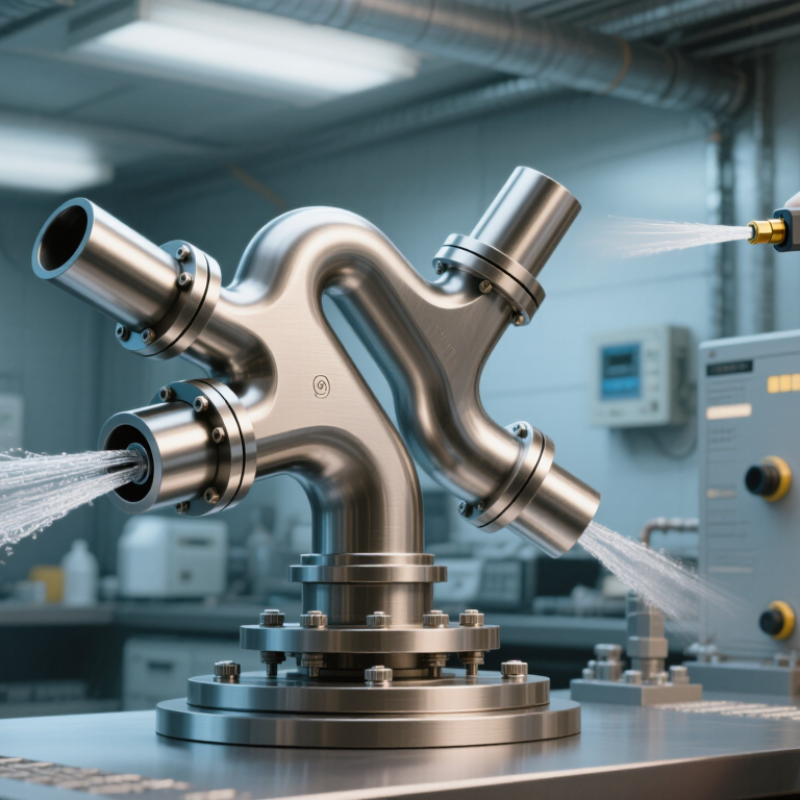
A metal irregular nozzle is a precision outlet with a non-circular opening or uneven internal passage. It directs liquid, gas, or fine particles into a controlled pattern. Unlike a standard round nozzle, its shape may create a fan, slot, oval, or asymmetric discharge. Geometry controls everything.

Inside the nozzle, pressure pushes the medium through a narrowing passage. The passage converts pressure into velocity and shapes the exiting stream. Internal corners, wall thickness, and surface finish can change turbulence, coverage, and noise. A poorly blended transition may create dead zones or uneven spray. In practical testing, I watch the outlet pattern on a marked surface, then compare it with flow-rate readings. Small visual differences can signal larger performance problems. Measure the outlet.

Choosing one in 2026 requires more than matching a catalog drawing. Check the medium, operating temperature, pressure range, corrosion risk, and cleaning method. Stainless alloys suit many demanding environments, but material compatibility still needs verification. Ask for dimensional tolerances, test data, and inspection records. A precise external shape cannot repair a rough internal passage. The first sample may disappoint, especially when real pressure differs from laboratory pressure. I would test several operating points before approving production, rather than trusting one attractive result. CAD files and simulation help, but a physical flow test remains important. Even reliable calculations can miss deposits, vibration, or assembly errors.

Which Metal Types and Surface Finishes Suit Different Applications?

Choosing an irregular metal nozzle starts with the medium, not appearance. In field testing, I have seen complex profiles fail when the alloy matched pressure but resisted cleaning poorly. Stainless steel suits water, mild chemicals, and food-contact equipment when corrosion resistance matters. Nickel alloys suit aggressive chemicals and elevated temperatures, but they cost more and require careful machining. Aluminum keeps assemblies light. It works best with controlled temperatures and non-abrasive fluids. Brass offers easy machining, yet it may be unsuitable for certain chemicals or purity-sensitive systems.

Surface finish changes flow, cleaning, and service life. Electropolished stainless steel gives a smoother internal path, reducing residue traps in hygienic lines. Passivation supports corrosion resistance after machining, but it cannot repair deep scratches. Anodized aluminum gains a harder outer layer. I would avoid assuming it fits every hot or chemically harsh process. A brushed exterior hides handling marks, while a mirror polish improves cleanability and visual inspection. Internal finish matters more than shine.

For abrasive spray, choose a harder alloy or a replaceable insert. For precision mist, inspect burrs at transitions and verify the orifice under magnification. Record pressure, temperature, fluid chemistry, and cleaning method before ordering. I once prioritized a beautiful finish and overlooked a narrow shoulder; buildup appeared within weeks. That mistake changed my checklist. Ask for material certificates, roughness readings, dimensional tolerances, and a sample flow test. Real conditions expose weaknesses that catalog images cannot show.

How to Choose a Metal Irregular Nozzle in 2026? - Which Metal Types and Surface Finishes Suit Different Applications?

Metal Type Typical Composition or Grade Family Approximate Service Temperature* Corrosion and Chemical Resistance Common Surface Finishes Recommended Applications Key Selection Considerations
304 Stainless Steel Austenitic stainless steel; approximately 18% chromium and 8% nickel Continuous service commonly up to about 870°C in air, depending on design and environment Good resistance to moisture, many food-process fluids, and mild chemicals; vulnerable to chloride pitting and crevice corrosion Mill finish, brushed, satin, electropolished, mechanically polished General-purpose spray, air, water, food-processing, packaging, and light chemical service A balanced choice when corrosion resistance, formability, weldability, and cost are important
316L Stainless Steel Low-carbon austenitic stainless steel with molybdenum; commonly about 16–18% chromium, 10–14% nickel, and 2–3% molybdenum Continuous service commonly up to about 870°C in air, subject to the process environment Better resistance than 304 to chlorides, marine atmospheres, and many process chemicals; not immune to concentrated chlorides Satin, brushed, electropolished, passivated, mechanically polished Marine equipment, pharmaceutical and hygienic systems, chemical processing, high-humidity spray environments Choose the low-carbon version for welded assemblies where intergranular corrosion resistance is important
Duplex Stainless Steel Ferritic-austenitic stainless steel; common families include approximately 22% chromium grades and higher-alloy super-duplex grades Often selected for moderate-to-high temperature service; prolonged exposure above approximately 300°C may require metallurgical review High resistance to chloride stress-corrosion cracking, pitting, and erosion-corrosion when correctly specified Pickled and passivated, bead-blasted, brushed, electropolished where suitable Seawater, desalination, offshore, high-chloride chemical, and abrasive-fluid systems Provides high strength and corrosion resistance, but requires controlled welding and more careful fabrication
Carbon Steel Iron-carbon steel with carbon content typically below about 1%; exact grade depends on pressure and fabrication requirements Commonly suitable for moderate-temperature service; allowable limits depend strongly on grade, pressure, and code requirements Limited inherent corrosion resistance; requires coating, plating, lining, or controlled dry service Black oxide, zinc plating, painted or powder-coated surface, machined finish, abrasion-resistant overlay Dry air, non-corrosive gases, general industrial spray, and cost-sensitive systems Economical and strong, but avoid unprotected use with water, condensation, acids, or salt exposure
Aluminum Alloy Wrought or cast aluminum alloys; alloy selection determines strength, weldability, and chemical resistance Commonly used below about 150–200°C; strength decreases as temperature rises Naturally forms a protective oxide layer; vulnerable to strong acids, strong alkalis, and galvanic contact with dissimilar metals Anodized, clear or colored conversion coating, brushed, polished, bead-blasted Lightweight air systems, portable equipment, low-temperature water mist, and applications requiring low inertia Use isolation washers or compatible fittings to reduce galvanic corrosion against stainless steel or copper alloys
Copper Alloy Copper, brass, or bronze families; exact zinc, tin, or other alloy content affects performance Suitable temperature depends on alloy; high temperatures can reduce strength and accelerate oxidation Good thermal conductivity and generally good resistance to many waters; susceptible to ammonia, strong oxidizing chemicals, and some acidic conditions Natural or polished surface, nickel plating, chrome plating, passivation, protective lacquer Heat-transfer spray, water service, low-static applications, and decorative or conductive components Verify fluid compatibility and galvanic pairing; avoid unsuitable copper alloys in ammonia-containing environments
Nickel Alloy Nickel-chromium, nickel-molybdenum, or nickel-iron-chromium alloy families Often selected for elevated-temperature service; some grades retain useful strength above 600°C Excellent resistance in many high-temperature, reducing, oxidizing, and chemically aggressive environments; grade-specific evaluation is essential Machined, ground, polished, passivated, or specialized protective coating High-temperature gas, aggressive chemical spray, combustion-related, and severe corrosion service Higher material and machining cost is justified when temperature, corrosion, or service life requirements exceed stainless steel capability
Titanium Alloy Commercially pure titanium or alpha-beta titanium alloy families Commonly used for moderate-to-high temperatures; design limits depend on alloy, oxygen exposure, and mechanical loading Excellent resistance to seawater, chlorides, and many oxidizing media; unsuitable for some reducing acids and high-temperature hydrogen conditions Machined, pickled, passivated, polished, or bead-blasted Marine, aerospace, medical, and high-purity chemical systems where low mass and corrosion resistance are priorities High strength-to-weight ratio and excellent corrosion resistance, but costly machining and galling control may be required
Surface-finish selection guide: Use a smoother finish for hygienic, high-purity, and low-residue applications; use a brushed or satin finish when moderate cleanability and reduced glare are required; use a textured or coated finish when grip, wear resistance, or external protection is more important. Typical machined metal surfaces may range from approximately Ra 0.8–6.3 µm, while polished or electropolished surfaces can be substantially smoother. Actual roughness depends on the alloy, manufacturing process, geometry, and inspection method.
*Temperature values are general material-selection ranges rather than design limits. Final nozzle selection should verify pressure, flow velocity, fluid chemistry, particle loading, thermal cycling, weld condition, applicable codes, and the required orifice geometry.

How to Match Nozzle Shape, Size, and Flow Requirements

How to Choose a Metal Irregular Nozzle in 2026?
How to Match Nozzle Shape, Size, and Flow Requirements

An irregular metal nozzle should fit the process, not merely look unusual. Begin by mapping the outlet shape, inlet connection, spray angle, and installation space. A flat slot can create a wide sheet, while an offset opening may direct flow around a fixture. Measure the available clearance carefully. Small errors can change the spray pattern.

Flow requirements determine the effective opening size. Record the target flow rate, working pressure, fluid temperature, and viscosity. A larger outlet usually lowers pressure loss, but it may weaken the required jet force. For liquids, estimate pressure drop with tested flow data or qualified engineering software. Do not rely on diameter alone. Internal length, bends, surface finish, and edge sharpness also influence performance.

My early nozzle selections were too optimistic about flow stability. Real systems had pulsation, deposits, and uneven inlet pressure. That experience changed my inspection routine. I now test a sample nozzle under operating conditions, then check flow, coverage, temperature, and vibration. A stainless or nickel-based alloy may suit corrosive service, but compatibility must be verified with the actual fluid. Keep manufacturing tolerances realistic. Extremely narrow slots can be difficult to machine and clean. A slightly simpler shape may provide more reliable results. Document every measurement, including the details that seem minor.

Which Pressure, Temperature, and Compatibility Factors Matter?

How to Choose a Metal Irregular Nozzle in 2026?

Which Pressure, Temperature, and Compatibility Factors Matter?

Choosing an irregular metal nozzle starts with its real operating pressure. Do not rely only on the maximum number in a catalog. Check continuous pressure, pressure spikes, flow resistance, and connection loads. A nozzle rated for 10 bar may face damaging stress when a valve closes suddenly. Measure the system during startup and shutdown. Those brief peaks often reveal more than normal readings.

Temperature needs equal attention. Record the fluid temperature, surrounding heat, and cleaning cycle separately. A nozzle exposed to 180°C for ten minutes behaves differently from one operating there continuously. Thermal expansion can loosen joints or distort a carefully shaped outlet. Seals may harden, soften, or lose elasticity. Keep a margin between the expected temperature and the material limit. I have seen designs pass a bench test but fail after repeated heating and cooling.

Compatibility is not only about the nozzle metal. Review the fluid chemistry, suspended particles, moisture, and nearby metals. Some fluids cause pitting, while dissimilar metals can accelerate galvanic corrosion. Consider surface finish and internal corners, especially where residue may collect. Request material certificates, dimensional drawings, and pressure-test records from the manufacturer. These documents support a defensible choice. Still, paperwork is not proof of field performance. Test a representative nozzle with the actual fluid, fittings, and temperature cycle before full installation.

How to Inspect, Install, and Maintain a Metal Irregular Nozzle

How to Choose a Metal Irregular Nozzle in 2026?

Inspecting, installing, and maintaining an irregular metal nozzle requires practical judgment. Its curved passage may hide cracks, burrs, or trapped debris. Check the alloy certificate, wall thickness, bore profile, threads, flange face, and pressure rating. Use a light and borescope where access is limited. Liquid penetrant testing can reveal surface cracks, but qualified personnel should perform it. A polished nozzle is not automatically a safe nozzle.

The AMPP/NACE IMPACT study estimated global corrosion costs at about 3.4% of global GDP, or 2.5 trillion dollars annually. That older benchmark still shows why material selection matters. Match the nozzle alloy with temperature, fluid chemistry, velocity, and erosion risk. During installation, isolate and depressurize the line. Clean every sealing surface. Fit the correct gasket, avoid cross-threading, and tighten fasteners in a controlled pattern. Recheck alignment before gradual pressurization. The U.S. Department of Energy reports that compressed-air leaks may waste 20–30% of system output. A small leak deserves attention.

Tips: Photograph the nozzle before removal. Record torque, pressure, vibration, and flow readings. Inspect the outlet edge after the first operating cycle. Look for pitting, discoloration, abnormal spray, or rising noise. Do not rely only on scheduled maintenance; service conditions change. I once treated a minor vibration as harmless, and the wear pattern later proved otherwise. That assumption needed correction. Keep spare gaskets protected, and compare inspection records over time.

Back To Top