
How to Choose the Best Swiss Machining Supplier?
Choosing the right swiss machining supplier can determine whether a precision part becomes a reliable product or an expensive delay. Tight tolerances, miniature features, difficult materials, and repeatable delivery all demand more than an attractive quotation. The supplier must understand your application, not merely operate a machine.
Industry evidence supports careful evaluation. Grand View Research’s CNC Machine Market Size, Share & Trends Analysis Report describes continued market growth through 2030, driven by automation and precision manufacturing. This growth creates more supplier options, but it also increases quality differences. Deloitte’s 2024 Global Manufacturing Outlook highlights resilience, digital capability, and supply-chain visibility as important manufacturing priorities. These priorities apply directly to Swiss machining projects. A capable partner should provide process documentation, inspection records, material traceability, and realistic production schedules.
Look beyond hourly rates. Ask about machine capacity, bar-feeder capability, live tooling, secondary operations, and experience with your material. Review sample inspection reports, including CMM results and surface-finish measurements. Confirm whether the supplier follows ISO 9001, ISO 13485, AS9100, or another standard relevant to your industry. Certifications help, but they do not replace evidence from actual parts. Request a small prototype run when possible. It can reveal burrs, tool marks, packaging problems, or communication gaps early. No scorecard is perfect. A supplier with excellent equipment may still struggle with engineering feedback or schedule changes. The best decision balances technical competence, documented quality, responsiveness, capacity, and total lifecycle cost. Sometimes, the cheapest quote is simply the least complete one.
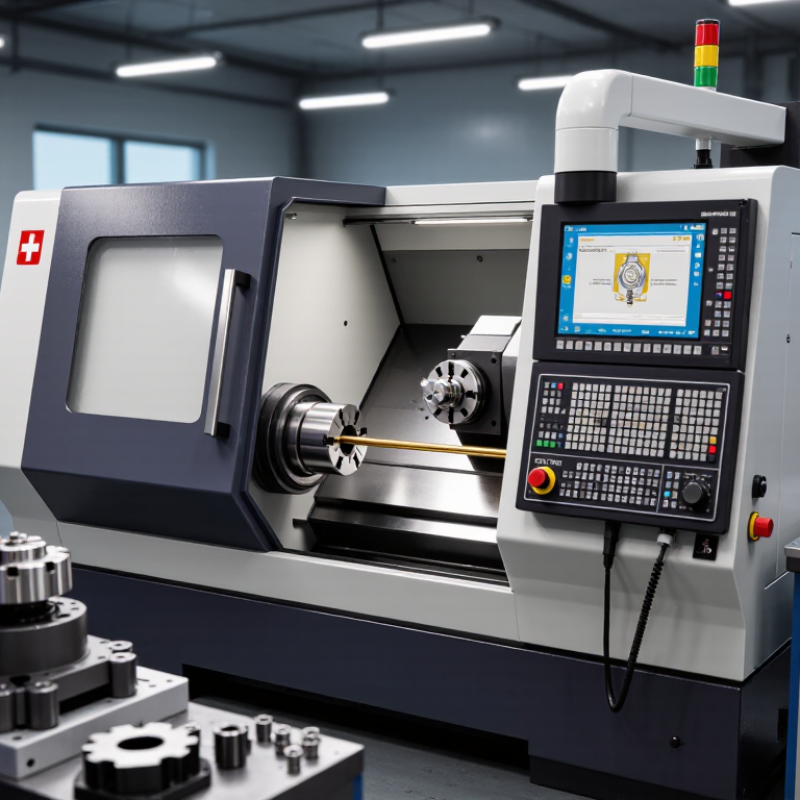
Define Part Requirements: Tolerances, Materials, Volumes, and Bar Sizes
How to Choose the Best Swiss Machining Supplier?
Define Part Requirements: Tolerances, Materials, Volumes, and Bar Sizes
Choosing a Swiss machining supplier starts with a precise definition of the part. State critical tolerances, datum references, surface finishes, and inspection methods before requesting quotations. A ±0.01 mm callout is not enough. Explain where that tolerance matters. This prevents costly assumptions during process planning. Mention the material grade and its condition, such as annealed bar or hardened stock. Different alloys cut differently, affect tool life, and may distort after machining.
Volume changes the best production route. Prototype quantities may need flexible scheduling, while recurring orders require stable cycle times and documented capacity. Give expected annual demand, release sizes, and forecast changes. Do not promise perfect forecasts. Your estimate may be wrong. That is acceptable when the supplier can discuss adjustment plans openly. Bar size deserves equal attention. Specify diameter, length, straightness, and allowable remnant waste. A narrow bar range can create extra setup work or force an unsuitable starting diameter.
Ask potential suppliers to review the drawing and confirm manufacturability in writing. Experienced teams should identify tight features, chip-control risks, and unsupported slender sections. Request sample inspection reports, material certificates, gauge calibration records, and traceability procedures. These details reveal whether quality depends on one skilled operator. It is easy to overlook packaging, burr limits, and cleaning requirements. Small omissions can delay otherwise successful parts. A short technical review often exposes gaps before metal reaches the machine.
| Requirement Dimension | Typical Requirement Range | What to Define Before Supplier Selection | Supplier Capability to Verify | Recommended Evaluation Notes |
|---|---|---|---|---|
| Critical Dimensional Tolerances | General CNC Swiss features often use ±0.01 mm; precision features may require approximately ±0.005 mm or tighter. | Identify critical dimensions, geometric tolerances, fits, datum references, and inspection points. | Confirm demonstrated process capability, in-process gauging, statistical process control, and measurement equipment suitable for the tolerance. | Do not judge suppliers by a quoted tolerance alone; request capability data for the actual material, size, and feature geometry. |
| Surface Finish | Machined surfaces commonly range from approximately Ra 0.8 to 3.2 µm, depending on material, tooling, and process. | Specify Ra values by surface, thread quality, burr limits, and whether polishing, tumbling, or other finishing is allowed. | Check cutting-tool control, deburring methods, surface-finish measurement, and ability to protect cosmetic or sealing surfaces. | A lower Ra requirement can increase cycle time and cost, especially on small parts with deep bores or difficult-to-machine alloys. |
| Material Type | Common Swiss-machined materials include free-machining steel, stainless steel, aluminum alloys, brass, copper alloys, titanium, and engineering plastics. | Define material grade, condition, certification requirements, corrosion requirements, and any restricted substances. | Verify experience with the exact grade, appropriate tooling and coolants, traceability, incoming inspection, and material certificates. | Titanium and work-hardening stainless steels may require slower cutting, rigid setups, specialized tooling, and more stringent process control. |
| Bar Diameter | Many Swiss-type machines are optimized for bar diameters from about 3 to 32 mm; some equipment supports larger diameters. | Specify nominal bar diameter, finished diameters, minimum wall thickness, remnant requirements, and allowable bar straightness. | Confirm machine envelope, guide-bushing range, collet and bar-feeder compatibility, and availability of the required bar size. | Selecting a machine close to the optimal diameter range can improve rigidity, cycle time, material yield, and cost. |
| Part Length and Length-to-Diameter Ratio | Swiss turning is particularly suitable for long, slender components that require support near the cutting zone. | Define overall length, unsupported length, concentricity requirements, slender features, and secondary-operation limits. | Review guide-bushing setup, sub-spindle reach, live tooling, vibration control, and achievable runout over the full part length. | Long small-diameter parts may need support strategies and cutting parameters designed specifically to prevent deflection and chatter. |
| Annual or Order Volume | Prototype: 1–100 pieces; low volume: 100–1,000; production: 1,000–100,000+ pieces, depending on part complexity. | State prototype quantity, annual demand, release frequency, forecast accuracy, lot size, and expected program duration. | Assess machine availability, automation, bar-feeding, lights-out production, capacity planning, and repeat-order control. | A supplier optimized for prototypes may not provide the capacity or cost structure required for stable high-volume production. |
| Part Geometry and Operations | Typical operations include turning, drilling, boring, threading, grooving, milling, cross-drilling, and polygon or contour work. | List all features, tool-access directions, internal bores, cross-holes, threads, chamfers, and required secondary operations. | Verify live tooling, Y-axis or B-axis capability where needed, sub-spindle transfer, automatic part handling, and inspection after complex operations. | Completing more features in one setup generally reduces handling and positional variation, but may require more advanced equipment. |
| Threading Requirements | External and internal metric, unified, pipe, and specialty threads may be produced, subject to diameter, pitch, depth, and material. | Specify thread standard, size, pitch, class or tolerance, full-thread depth, runout, and gauging method. | Confirm thread-cutting or thread-whirling capability, calibrated gauges, tool-life controls, and inspection records. | Small deep internal threads and difficult materials may require specialized tooling and additional inspection time. |
| Inspection and Documentation | Requirements may range from basic dimensional reports to first-article inspection, full traceability, and capability studies. | Define inspection plan, sampling level, calibration standards, material certificates, conformity documents, and data format. | Check calibrated CMMs, optical systems, thread gauges, air gauges, surface-finish testers, and documented nonconformance procedures. | Inspection scope should match the risk of the part; excessive reporting can add cost without improving product quality. |
| Post-Machining and Finishing | Possible requirements include passivation, plating, anodizing, heat treatment, cleaning, polishing, and controlled packaging. | Define finish specification, dimensional allowance, cleanliness level, masking areas, certification, and acceptance criteria. | Verify qualified process partners, lot traceability, post-finish inspection, contamination controls, and packaging suitable for the end use. | Finishing processes can change dimensions, hardness, surface properties, and appearance, so they must be included in the process plan. |
| Supplier Fit Decision | Best fit depends on the combined effect of tolerances, material, geometry, volume, bar size, quality controls, and delivery needs. | Use a complete drawing, 3D model when applicable, forecast, quality requirements, packaging instructions, and target delivery schedule. | Request a manufacturability review, capability evidence, sample inspection report, production lead time, and a clearly itemized quotation. | Choose the supplier whose proven process matches the complete requirement—not simply the lowest unit price. |
Related Posts
-
How to Choose the Best Swiss Machining Techniques for Efficiency?
-
Top CNC Solutions for 2026 What to Expect in Global Sourcing?
-
Top Swiss Lathes for Global Buyers in 2026?
-
What is a CNC Machining Center and How Does it Benefit Manufacturing Industries
-
What is a 3D CNC Machine? Exploring Features, Benefits, and Industry Growth Projections
-

Top 10 Swiss Lathe Applications in Modern Manufacturing Industry