
Skip to content

China Top 10 Palletizing Machine Manufacturers?

China has become a major source of automated packaging equipment for factories worldwide. Its manufacturers serve food, beverage, chemical, logistics, and consumer goods industries. This guide introduces ten notable Chinese Palletizing Machine manufacturers. It focuses on practical performance, not promotional claims.

The selection considers machine speed, payload range, robotic accuracy, control systems, and integration experience. It also examines factory capabilities, export history, technical support, and available certifications. A reliable supplier should explain cycle times clearly. It should also provide layout drawings, safety details, and realistic delivery schedules. Small details matter, such as gripper changes, pallet sensors, and access to spare parts.

No ranking is perfect. Public information differs between companies. Some manufacturers publish impressive case studies but provide limited technical evidence. Others have strong engineering teams but weaker international communication. Therefore, this list should support further supplier verification rather than replace it. Buyers should request sample testing with their actual cartons, bags, or containers. They should inspect load stability after transport and confirm service response times.

The featured companies represent different strengths. Some focus on high-speed robotic cells. Others specialize in heavy-duty layer palletizing or customized production lines. Their solutions may suit different factory sizes and budgets. A low purchase price can become expensive when integration is poor. Likewise, advanced equipment may be unnecessary for a simple, stable line.

This introduction prepares readers to compare China’s leading manufacturers with greater confidence. It emphasizes evidence, application fit, and long-term operating value. Real results depend on proper installation and operator training. That point is easy to overlook.
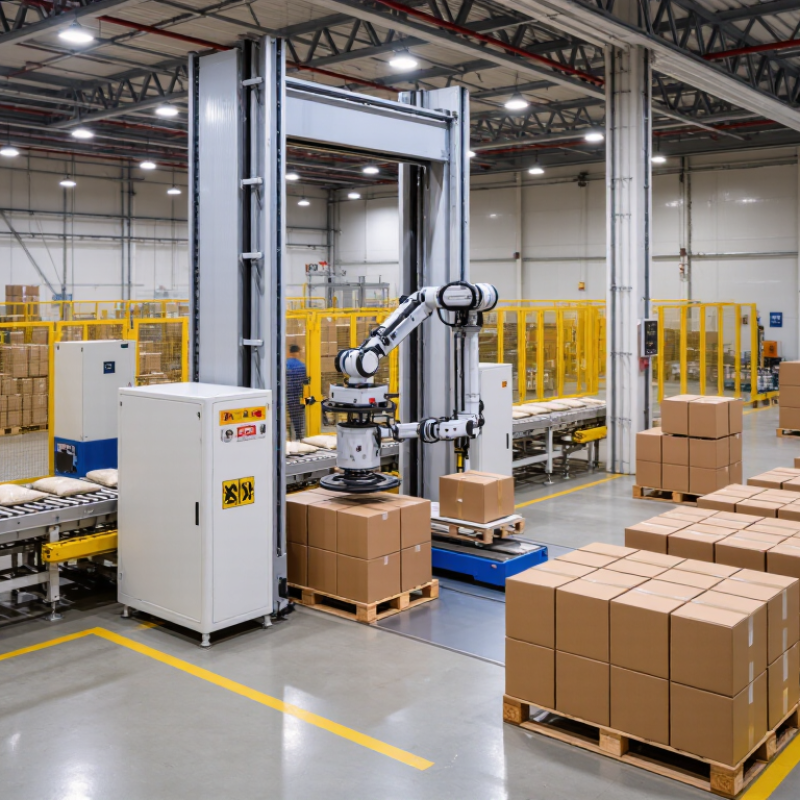
China Top 10 Palletizing Machine Manufacturers?

What Defines a Palletizing Machine: 20–40 Cycles per Minute and 10–50 kg Payloads

China Top 10 Palletizing Machine Manufacturers?

What Defines a Palletizing Machine: 20–40 Cycles per Minute and 10–50 kg Payloads

A palletizing machine is defined by more than a catalogue photograph. In practical production, 20–40 cycles per minute is a useful mid-range benchmark. It suits many food, chemical, building material, and consumer goods lines. Each cycle may include gripping, lifting, turning, and placing one case. That number matters. A machine rated at 40 cycles may achieve less with unstable cartons or irregular bags.

Payload also changes the engineering requirements. A 10 kg carton needs different tooling from a 50 kg sack. Heavier loads demand stronger arms, rigid frames, and carefully controlled acceleration. Vacuum grippers work well with sealed, smooth boxes. Fork or clamp tools may perform better with porous bags. Small details affect the entire pallet pattern.

When comparing Chinese manufacturers, buyers should request live tests with their own products. Check layer accuracy, corner alignment, changeover time, and recovery after an emergency stop. Ask for cycle data under full payload, not empty fixtures. Noise, dust protection, and access for maintenance deserve attention too. I have seen impressive demonstrations fail during mixed-size production. That is an uncomfortable point. A lower-speed machine can sometimes deliver better uptime and fewer damaged packages. Operators should also review training, spare-part availability, software access, and documented safety procedures before signing a purchase contract.

China’s Top 10 Palletizing Machine Manufacturers by Technology and Industry Reach

China’s Top 10 Palletizing Machine Manufacturers by Technology and Industry Reach

China’s leading ten palletizing machine manufacturers are best compared by engineering depth, not advertising volume. This review considers robotic speed, layer accuracy, vision integration, service coverage, and export experience. IFR’s World Robotics 2024 report recorded 276,288 industrial robot installations in China during 2023. That figure represented about 51% of global installations. The market is highly competitive.

The strongest suppliers typically offer high-speed layer palletizers, articulated robots, collaborative systems, and complete conveyor integration. Food, beverages, chemicals, building materials, and e-commerce remain important application sectors. PMMI’s automation research identifies labor shortages, flexible production, and safety improvements as major investment drivers. These factors support demand for compact systems with quick recipe changes. However, technology claims need careful testing. A machine rated for 1,200 bags per hour may perform differently with unstable cartons, mixed formats, or dusty products. Real factory trials matter.

Industry reach also depends on commissioning teams and spare-parts response. Manufacturers with overseas technicians often reduce installation delays and training costs. Export documentation and compliance with ISO 10218 and related safety practices should be checked before purchase. Public rankings remain imperfect because companies disclose different data. Some report shipments, while others emphasize project value. Therefore, a credible top-ten comparison should combine verified installations, sector coverage, response time, and long-term operating evidence. Technology alone is not enough. Reliability decides the final result.

China’s Top 10 Palletizing Machine Manufacturers by Technology and Industry Reach

Industry benchmark dimensions used to evaluate technology capability and market reach without displaying individual company or brand data.

The benchmark assigns a total weighting of 100 points across six widely used purchasing criteria: automation flexibility, payload and reach, system integration, throughput, safety compliance, and service coverage. Higher weighting indicates greater influence on technology and industry reach when comparing palletizing machine suppliers.

Comparing Robot, Column, and Cartesian Palletizers by Speed and Payload

China’s top palletizing machine manufacturers should be compared by machine architecture, not brochure claims. Product weight, case dimensions, pallet height, and changeover frequency affect real output. A factory visit often reveals more than a speed table. Ask for a live cycle test using your actual cartons, not sample boxes.

Robot palletizers offer the broadest flexibility. Four-axis systems can often handle mixed patterns, changing pallet positions through software. Their practical speed may range from 8 to 25 cases per minute, depending on payload and grip time. Payloads commonly cover light cartons to heavy bags, but higher loads can reduce acceleration. Robots also need safety fencing, careful programming, and trained maintenance staff. Fast, but not effortless.

Column palletizers usually suit stable products and repeated layer patterns. Their rigid movement can deliver high throughput with consistent placement. They are often effective for heavier cases, though format changes may require mechanical adjustments. Cartesian palletizers use linear X, Y, and Z movement. They provide clear positioning and strong repeatability, especially in organized warehouse layouts. Their speed is often moderate, but their payload handling can be predictable. I would not choose by maximum payload alone. A machine lifting 50 kilograms may slow sharply at full reach. Strange, but common. Trial data, gripper design, and recovery time deserve equal attention.

Evaluating Manufacturers Through ISO 10218, CE, OEE, and Service Metrics

China Top 10 Palletizing Machine Manufacturers?

A serious shortlist should begin with safety evidence, not brochure speed. ISO 10218 requires risk assessment, safeguarding, emergency functions, and validated robot integration. Buyers should request the latest compliance files, test records, and machine-specific declarations. CE marking also matters, but it is not a universal quality certificate. The manufacturer must show how the complete palletizing cell meets applicable European requirements.

Production data deserves equal attention. The International Federation of Robotics reported 541,302 industrial robots installed worldwide in 2023. This growth increases the need for stable integration and practical support. OEE should be measured during factory acceptance testing and live production. Vorne’s OEE reference standard identifies 85% as world-class, while many plants operate near 60%. That gap is real. It should not be hidden by short demonstrations.

Service metrics can separate strong suppliers from average ones. Compare remote response time, onsite arrival time, mean time to repair, spare-parts availability, and operator training hours. Ask for OEE records from comparable loads, not ideal cartons. A supplier promising 99% uptime may be overstating reality. Pallet patterns change, film breaks, and sensors become dirty. These details expose engineering maturity. A practical evaluation should combine ISO 10218 evidence, CE documentation, measured OEE, and written service commitments. Sources: International Federation of Robotics, World Robotics 2024; Vorne, OEE Industry Standard.

Selecting a Chinese Palletizing Supplier for 1,000–2,000 Cases per Hour

China Top 10 Palletizing Machine Manufacturers?

Selecting a Chinese Palletizing Supplier for 1,000–2,000 Cases per Hour

Choosing a palletizing supplier for 1,000–2,000 cases per hour requires more than comparing catalog prices. I inspect actual case samples, conveyor layouts, and pallet patterns before discussing equipment. A reliable supplier should calculate cycle time from case dimensions, weight, pallet size, and stacking height. A machine rated at 2,000 cases may reach that speed only under ideal conditions.

Ask for a live factory test using your products. Watch how the gripper handles slippery cartons, uneven boxes, and damaged corners. Confirm the robot’s reach, payload, safety fencing, and changeover time.

Control cabinets should include clear wiring labels and accessible components. Software should allow operators to adjust layer patterns without calling an engineer. Small details matter.

I also request references from installations with similar output. Speak with maintenance staff, not only sales representatives. Their comments often reveal noise, spare-part delays, and cleaning difficulties. Service response should be written into the contract, including remote support and technician availability.

Be careful with impressive videos. They may hide manual feeding or slower real production. I once trusted a promised throughput without checking carton variation; the final line needed extra accumulation space. That mistake was avoidable.

A careful supplier will share test data, utility requirements, acceptance criteria, and realistic limits before payment.

Article Source:

Back To Top