
Skip to content

2026 Top Arc MMA Welders for Global Buyers

Choosing a 2026 Arc MMA Welder means matching machine capability to real work, not chasing the highest amperage on a product label. Buyers should compare output range, duty cycle, input-voltage flexibility, weight, and protection against dust and impact. These details matter on a repair truck, in a small fabrication shop, or beside a steel gate on a windy afternoon. A compact welder may travel easily, but its duty cycle can limit sustained work. A powerful model may handle thicker stock, yet prove awkward where power supply is limited.

For this guide, welding engineer John C. Lippold is a relevant authority on welding metallurgy. However, no verified quotation from him on choosing an MMA welder is available here, so attributing a direct quote would be misleading. The practical rule is simple: “Buy for the electrode, workpiece, and power available—not the biggest number on the nameplate.” Treat that as editorial guidance, not a quotation from Lippold.

The models ahead are assessed through buyer-focused criteria, including arc stability, control layout, portability, and support for common stick electrodes. Look closely at the cable connections and adjustment controls; gloves can make a tiny dial surprisingly frustrating. Specifications still need context. Manufacturers may describe duty cycle under different test conditions, and headline figures rarely tell the whole story. That is worth questioning. This comparison aims to help global buyers shortlist suitable machines, then verify local voltage, consumable compatibility, warranty terms, and service access before purchase.
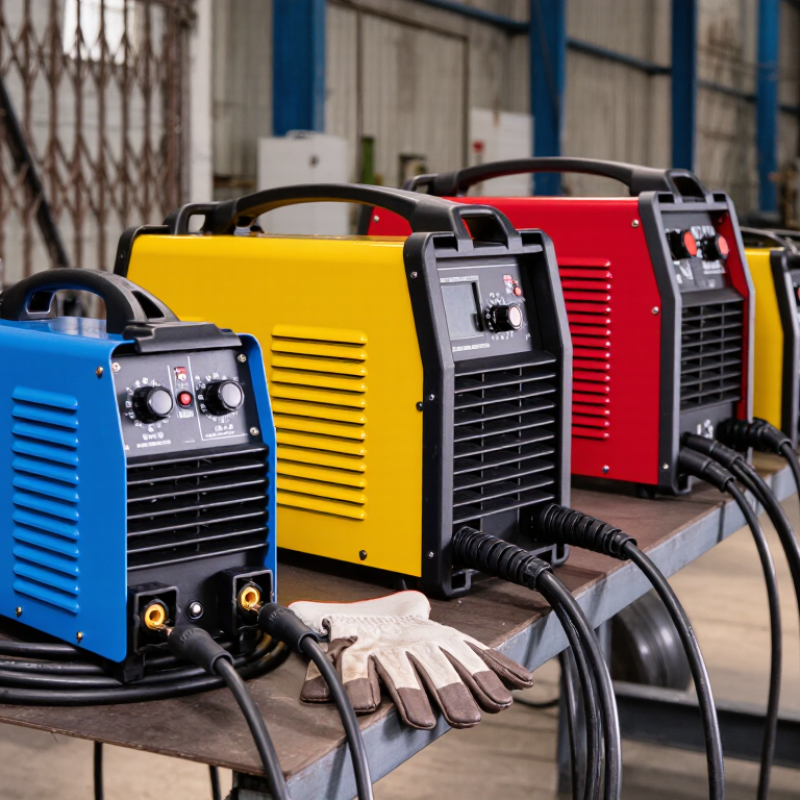
2026 Top Arc MMA Welders for Global Buyers

How Arc MMA Welding Works and Where It Is Used

2026 Top Arc MMA Welders for Global Buyers

How Arc MMA Welding Works and Where It Is Used

Manual metal arc welding, often called MMA or stick welding, uses an electric arc to join metal. The arc forms between the workpiece and a flux-coated consumable electrode. It melts both the electrode and a small area of the base metal, creating the weld bead. The coating produces shielding gas and a slag layer, helping protect the hot metal from contamination. No external shielding gas is needed. The slag must be chipped away after cooling.

MMA is commonly used for steel repairs, construction, agricultural equipment, and maintenance work. Its portable setup suits outdoor jobs where wind can disturb gas-shielded processes. A welder may use it to repair a cracked bracket or join steel plates on site. Electrode choice, current setting, and material thickness all affect the result. AC or DC compatibility depends on the electrode and power source.

The process looks simple. Consistent results take practice. Too much current can cause spatter and undercut; too little may leave a weak, uneven bead. Slag trapped between passes is another easy detail to miss. Clean the joint, keep a steady arc length, and inspect the finished weld under good light. Even careful settings cannot replace proper surface preparation or suitable protective equipment.

Key Specifications for Evaluating MMA Welders

For an MMA welder, start with output range, input supply, and duty cycle. Match amperage to the electrodes and material thickness you actually use. A 160 A rating means little if the machine overheats during repeated passes. IEC 60974-1:2017 specifies duty-cycle ratings over a ten-minute period under defined load and ambient conditions. Compare machines at the same current and duty cycle. Numbers need context.

Check whether the unit supports the site’s voltage, polarity options, and electrode sizes. Confirm its open-circuit voltage and protection features against the manufacturer’s technical documentation and applicable requirements. On a job site, a long lead, dusty enclosure, or generator supply can affect performance. Review the ingress-protection rating, weight, cable connections, and stated generator compatibility. A compact unit may be easier to carry, but that does not guarantee stable output.

Serviceability matters, too. The U.S. Bureau of Labor Statistics’ 2024 Occupational Outlook Handbook projects about 45,800 annual openings for welding-related occupations from 2023 to 2033. That figure is U.S.-specific, but it highlights the value of clear controls and accessible maintenance information. Ask suppliers for test conditions, spare-parts availability, and local service details. One caveat: published ratings cannot fully predict arc feel in your hands. If possible, trial the welder with your usual electrodes before ordering.

Leading Arc MMA Welders for Global Buyers in 2026

Leading Arc MMA Welders for Global Buyers in 2026

For global buyers, a capable arc MMA welder should suit the worksite, not just look strong on a specification sheet. Check its input voltage, rated output, and duty cycle against the jobs it will perform. A compact unit may be easier to carry between repair bays, while heavier fabrication can demand longer operating periods and suitable cooling. Small details matter. Inspect the cable length, electrode holder, and ground clamp; awkward leads can slow work in tight spaces.

Reliable arc starting and a steady current help welders manage common electrodes and varying material thicknesses. Features such as hot start and adjustable arc force can make starts and arc control easier, but settings still require operator judgment. Test the machine with the electrodes and power supply available at the intended site. A brochure cannot reveal every behavior. I would also verify overload protection, enclosure durability, and clear operating instructions before purchase.

For buyers serving several regions, confirm that the supplied version matches local electrical infrastructure and includes understandable documentation. Ask about replacement parts, warranty coverage, and access to technical support before placing a large order. These checks are practical, not glamorous. It is easy to overvalue peak amperage; actual performance also depends on duty cycle, setup, consumables, and user skill. Record a short trial weld and inspect its consistency before approving a model for broader deployment.

2026 Top Arc MMA Welders for Global Buyers

Typical MMA (SMAW) electrode current ranges can help buyers assess the output capacity needed for different welding tasks.

These are general reference ranges in amperes. The recommended current varies with electrode type, manufacturer, welding position, and application; always follow the electrode packaging and equipment guidance.

How to Match a Welder to Local Power and Work Conditions

An MMA welder that fits the catalog can still fail at the worksite. Match its nameplate voltage, phase, and frequency to the actual supply, not just the country’s nominal rating. Measure at the outlet under load. Long extension leads, shared circuits, and voltage drops can cause difficult starts or nuisance trips. IEC 60038 defines standardized supply voltages, but site wiring determines what the welder actually receives. Check its input range, maximum input current, and recommended circuit protection before ordering.

Work conditions matter just as much. IEC 60974-1:2021 uses a 10-minute basis for duty-cycle ratings; a 60% rating means six minutes of welding and four minutes of cooling at the stated conditions. Check the rated current and ambient temperature, rather than assuming that figure applies at maximum output. With a generator, compare the welder’s input demand against continuous generator capacity, not its short-term peak. Dust, damp floors, long cables, and frequent starts also affect practical performance. A tidy specification sheet can hide these details. It is easy to overlook them when comparing prices.

Safety, Maintenance, and Long-Term Ownership Factors

For global buyers, a welder’s safety features matter as much as its output. IARC Monographs Volume 118 (2017) classified welding fumes as carcinogenic to humans, making effective extraction and suitable respiratory protection essential. Check that the machine has sound insulation, secure leads, and clear controls that remain usable with gloves. OSHA’s hot-work standard, 29 CFR 1910.252, specifies a fire watch of at least 30 minutes in applicable situations. Local requirements may differ. Small details matter.

Long-term ownership depends on parts access and straightforward maintenance. Inspect cable insulation, electrode holders, connectors, fans, and air vents regularly; dust-packed vents can raise operating temperatures. Keep service records, note repair intervals, and confirm that replacement parts can be sourced in the buyer’s region. A low purchase price can lose its appeal when a simple fan or control repair causes weeks of downtime. That happens.

Tips: Before purchase, ask for the duty-cycle rating and maintenance guidance, then compare them with the intended workload. Keep the unit dry, clean its vents with power disconnected, and replace damaged leads promptly. Do not assume every workshop has ideal conditions; humidity, abrasive dust, and rushed storage can shorten equipment life. The checklist is useful, but real maintenance habits still need review.

2026 Top Arc MMA Welders for Global Buyers — Safety, Maintenance, and Long-Term Ownership Factors
Welder Category Typical Supply Practical Output Range Duty-Cycle Buying Target Common Electrode Range Best-Fit Applications Safety and Site Checks Maintenance and Ownership Factors
Compact portable inverter Single-phase 120 V or 220–240 V, depending on configuration About 80–160 A; maximum output depends on the supply voltage and input circuit Compare the rated duty cycle at the output current you will actually use; a higher output setting generally reduces available welding time Commonly 1.6–3.2 mm coated electrodes, subject to machine capacity Light repair, farm work, home workshops, and occasional maintenance Confirm the local voltage, frequency, plug, breaker, and extension-cable requirements. Use suitable eye, hand, body, and respiratory protection. Low transport burden; keep air vents clear, protect from dust and moisture, and check cables and electrode holders regularly. Confirm local parts and service access before purchase.
General-purpose workshop inverter Single-phase 220–240 V About 140–220 A For repeated work, compare duty-cycle ratings at a useful working current—not just the advertised maximum output Commonly 2.0–4.0 mm coated electrodes Fabrication, gates, agricultural equipment, and routine workshop repairs Check the input-current demand against the site circuit. Provide ventilation, a dry work area, a welding screen, and appropriate fire controls. Inspect the mains lead, welding leads, connectors, and cooling openings. A removable dust filter can simplify cleaning where the work area is dusty.
High-output single-phase inverter Single-phase 220–240 V; input-circuit capacity is especially important About 180–250 A, with usable output limited by the supply and rated duty cycle Choose a rating that supports the planned electrode size and work interval; allow for reduced output on long or undersized extension cables Commonly 2.5–5.0 mm coated electrodes, where supported by the machine and circuit Heavier repair work and small-scale fabrication where three-phase supply is unavailable Have the supply circuit checked by a qualified electrician when its capacity is uncertain. Follow the equipment instructions for grounding and overcurrent protection. Higher output can increase thermal and electrical demands. Check the manual for cooling-clearance requirements, allowable ambient conditions, and serviceable components.
Three-phase industrial inverter Three-phase 380–415 V or another region-specific rated supply About 250–400 A, depending on the machine and supply configuration Evaluate the stated duty cycle at the required current and ambient temperature; continuous production may require a higher-rated unit Commonly 2.5–6.0 mm coated electrodes, within the rated output range Production workshops, structural fabrication, and frequent heavy-duty maintenance Verify phase count, voltage, frequency, protective earth, and installation requirements. Use trained operators and manage fumes, hot work, and fire risk. Plan for periodic inspection and qualified servicing. Consider the availability of local technical support, replacement fans, and electronic service parts.
Generator-compatible inverter Supply from a generator only when its output quality and capacity meet the welder’s specifications Varies by welder; select the output needed for the intended electrode and job Use the machine’s rated duty-cycle data and check generator capacity under welding load, including starting and transient demands Choose an electrode diameter within the welder’s rated range and the generator’s usable capacity Remote construction, field repair, and sites without dependable mains power Check generator voltage regulation, frequency, earthing arrangement, and manufacturer compatibility guidance before connecting equipment. Allow for fuel, generator servicing, and transport costs as well as welder upkeep. Keep both machines protected from rain, dust, and blocked airflow.
Buyer’s note: Output ranges and electrode sizes are broad category-level guides, not guaranteed specifications for an individual machine. Before purchase, verify the manufacturer’s rating plate and manual, including supply requirements, duty cycle, ingress protection, applicable electrical safety requirements, warranty terms, and local service availability.
Back To Top