
Skip to content

China Top Liquid Nitrogen Dosing System Manufacturers

China has become an important manufacturing base for packaging equipment and cryogenic dosing technology. This article examines China Top Liquid Nitrogen Dosing System Manufacturers through practical, technical, and purchasing perspectives.

A reliable Liquid Nitrogen Dosing System must control nitrogen volume, timing, pressure, and container compatibility. Small dosing errors can affect package strength, oxygen levels, and production consistency. Experienced manufacturers usually provide stainless steel contact parts, insulated pipelines, adjustable dosing valves, and programmable controls. Some systems also include nitrogen sensors, alarm functions, and automatic fault protection. These details matter on a busy filling line.

Real experience matters.

A suitable supplier should explain how its equipment performs with water, beverages, oils, or pharmaceutical containers. Buyers should request test videos, performance data, maintenance records, and installation guidance. Factory audits can reveal assembly quality, welding standards, spare-parts capacity, and technical support. Certifications are useful, but they do not replace careful verification. A polished website may hide limited engineering experience.

This overview compares manufacturers by product design, customization ability, quality control, export experience, and after-sales service. It also considers dosing accuracy under changing production speeds and temperatures. However, no ranking can fit every project. A supplier serving beverage cans may not understand sterile packaging requirements. That limitation deserves attention. Readers should confirm materials, local compliance, delivery terms, and commissioning support before signing a contract. Careful comparison can reduce downtime and create a safer, more dependable nitrogen dosing process.
China Top Liquid Nitrogen Dosing System Manufacturers

Liquid Nitrogen Fundamentals: −196°C Boiling Point and 1:694 Expansion Ratio

China Top Liquid Nitrogen Dosing System Manufacturers

Liquid nitrogen boils at approximately −195.79°C, commonly rounded to −196°C. The National Institute of Standards and Technology lists this value at standard atmospheric pressure. At such a low temperature, heat enters the liquid continuously through pipes, valves, and containers. Even well-insulated equipment experiences some evaporation.

The striking figure is the expansion ratio. One liter of liquid nitrogen can produce about 694 liters of nitrogen gas under typical atmospheric conditions. This estimate comes from thermophysical property tables based on NIST data and standard gas calculations. A small dosing error can therefore create a large gas volume.

Safety focus
Ventilation, pressure relief, and oxygen monitoring deserve serious attention.

For liquid nitrogen dosing systems, manufacturers should control flow stability, nozzle temperature, and filling speed together. A chilled stainless-steel line may reduce premature vapor formation. A calibrated mass-flow device can improve repeatability during high-speed packaging. However, the 1:694 ratio is not a universal constant. Temperature, pressure, liquid purity, and measurement position change the result. This is where a neat specification can become misleading.

Field experience also shows a practical weakness: operators often trust the displayed dose more than the actual container temperature. Periodic weighing and leak checks can reveal that gap. Professional guidance from compressed-gas safety publications recommends engineered ventilation and documented operating procedures, rather than relying on warning labels alone.

Core Components of a Liquid Nitrogen Dosing System

China Top Liquid Nitrogen Dosing System Manufacturers

Core Components of a Liquid Nitrogen Dosing System

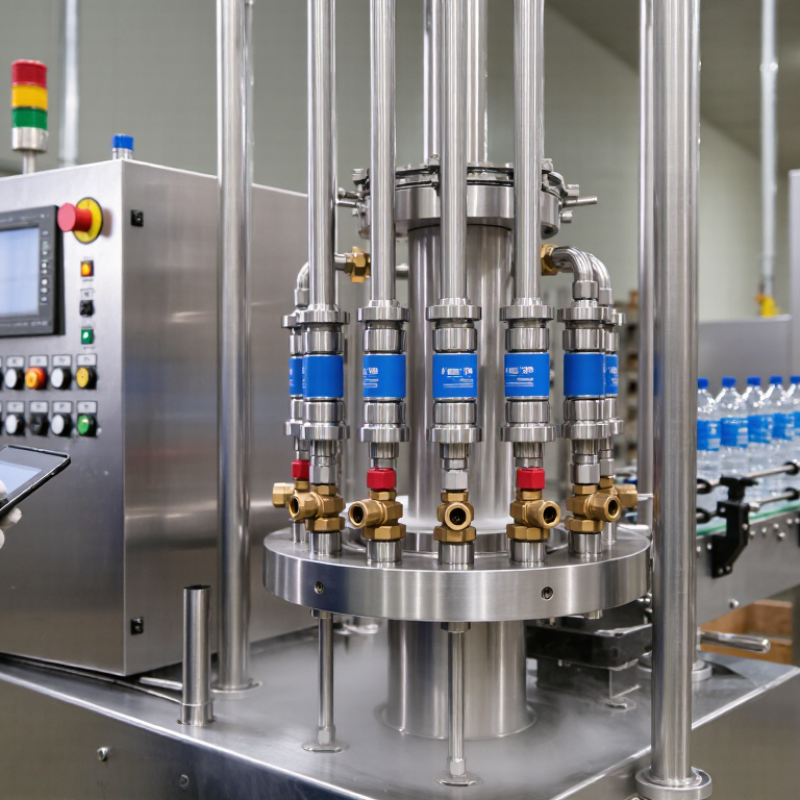
A liquid nitrogen dosing system begins with a vacuum-insulated storage tank. The tank limits heat transfer and reduces unnecessary evaporation during production. Its pressure gauge shows operating conditions clearly. A calibrated level sensor helps operators prevent empty runs and unstable dosing.

The dosing valve controls how much nitrogen enters each container. Fast-response solenoid valves support accurate timing on high-speed filling lines. The dosing nozzle must match the container opening and product format. Small changes in nozzle height can affect pressure, splashing, and final dose consistency. Insulated transfer pipes keep nitrogen colder before it reaches the valve. This detail is often underestimated.

A programmable controller coordinates sensors, valves, conveyor signals, and emergency stops. Reliable systems also use pressure regulators, filters, and venting components designed for cryogenic service. Operators should check sensor readings against actual container performance, not trust software alone. Condensation around a pipe may indicate insulation damage or an unstable thermal condition. In practice, even a well-designed system may need adjustment after installation. Container speed, ambient temperature, and line vibration can change the result. That is where field experience matters.

Maintenance teams should inspect seals, valve response, wiring, and insulation regularly. They also need clear operating procedures and suitable protective equipment. A manufacturer with documented testing, traceable component selection, and responsive technical support offers stronger reliability. Precision is essential. Small errors become expensive at scale.

Dosing Methods for PET, Cans, Bottles, and Flexible Packaging

China Top Liquid Nitrogen Dosing System Manufacturers

Liquid nitrogen dosing must match the package, filling speed, and desired internal pressure. For PET containers, an inline doser places a measured droplet before capping. The nitrogen vaporizes and stiffens the bottle during transport. Dose volume needs careful adjustment. Too much nitrogen can distort thin walls or stress the closure. A practical trial checks bottle weight, pressure, cap torque, and appearance after several hours.

Cans usually receive nitrogen after filling and before seaming. The dosing point must allow enough time for vapor expansion without delaying the seamer. Sensors can verify container presence and dosing timing. For rigid glass bottles, the system should control splash, temperature exposure, and closure movement. Operators should record actual dose results, not trust a fixed setting forever. Line speed, product temperature, and headspace often change during production.

Flexible packaging requires a smaller, more controlled dose. Nitrogen may enter the pouch just before sealing, where rapid vaporization supports a stable pack shape. Excessive dosing can strain seals or create swollen packs. Film thickness and seal temperature matter. A reliable manufacturer should provide cleanable contact parts, guarded piping, pressure monitoring, and trial data for the customer’s exact package. No line is perfectly stable. I would also question systems that promise identical results without discussing product variation, maintenance intervals, and operator training.

Key Specifications: Flow Rate, Dose Accuracy, and Line Speed

China Top Liquid Nitrogen Dosing System Manufacturers

When evaluating liquid nitrogen dosing system manufacturers in China, focus on measurable performance rather than attractive catalog claims. Flow rate should match container volume, product temperature, and production demand. A system may dose 20 to 120 drops per minute, but the correct range depends on the packaging line. Too much nitrogen can deform containers. Too little may reduce pressure stability.

Dose accuracy deserves careful testing. Many buyers target consistency within ±5%, although tighter control may be required for sensitive packaging. Accuracy depends on nozzle design, liquid nitrogen purity, valve response, and sensor calibration. Line speed is equally important. A dosing unit must follow conveyors running at 100, 300, or even 600 containers per minute. Small timing errors can create empty doses or splashing. That is not theoretical. It appears during real production.

Tips: Request a factory trial using your own container sizes and line speed. Check dose weight across several hours, not only ten samples. Ask for calibration records, emergency shutoff functions, insulation details, and cleaning procedures. Confirm whether the control system records alarms and production data. A manufacturer with practical testing experience should explain limits clearly, not promise perfect results. Specifications can look precise. Field conditions are less polite. Temperature changes, vibration, and operator adjustments may affect performance, so leave reasonable capacity for correction.

China Top Liquid Nitrogen Dosing System Manufacturers - Key Specifications: Flow Rate, Dose Accuracy, and Line Speed

System Category Typical Liquid Nitrogen Flow Rate Typical Dose Range Dose Accuracy Maximum Line Speed Container Compatibility Common Application
Low-Speed Inline Dosing System 5–30 L/h 0.05–0.50 mL per container ±5% to ±10% Up to 120 containers/min Small bottles, vials, cups, and narrow-neck containers Small-batch beverage, food, pharmaceutical, and laboratory packaging
Standard Inline Dosing System 20–100 L/h 0.10–2.00 mL per container Typically ±3% to ±5% 120–300 containers/min PET bottles, HDPE bottles, cans, and glass containers Carbonated beverages, edible oils, dairy drinks, and packaged foods
High-Speed Inline Dosing System 60–250 L/h 0.20–5.00 mL per container Typically ±2% to ±3% 300–600 containers/min High-speed PET, aluminum can, and glass-bottle lines Large-scale beverage and food production
Intermittent Dosing System 5–80 L/h 0.05–3.00 mL per container Typically ±3% to ±8% Up to 180 containers/min Irregularly spaced containers and batch-fed packaging Flexible production lines and products with variable container spacing
Multi-Head Dosing System 80–500 L/h total 0.10–5.00 mL per container and per head Typically ±2% to ±4% 300–1,200 containers/min Parallel lanes of bottles, cans, cups, or trays High-throughput packaging with synchronized filling heads
Cryogenic Tunnel or Chamber System 100–1,000 L/h total Application-dependent; controlled by temperature and residence time Usually monitored by temperature rather than volumetric dose Variable; commonly 5–30 m/min conveyor speed Open trays, cartons, bulk food products, and processing conveyors Rapid cooling, freezing, and temperature control during processing
Pharmaceutical-Grade Dosing System 5–80 L/h 0.02–2.00 mL per vial or container Typically ±1% to ±3% 60–300 containers/min Vials, ampoules, bottles, and other controlled-dose containers Oxygen displacement, inerting, and cryogenic processing support
Food-Grade Dosing System 20–250 L/h 0.10–5.00 mL per container Typically ±2% to ±5% 120–600 containers/min PET bottles, cans, jars, cups, and flexible food packages Pressure enhancement, shelf-life extension, and product cooling

Note: The figures shown are representative engineering ranges for liquid nitrogen dosing equipment and may vary according to container geometry, liquid nitrogen pressure, nozzle design, product temperature, control method, and production-line layout.

China’s Leading Manufacturers: Technologies, Certifications, and Selection Criteria

China Top Liquid Nitrogen Dosing System Manufacturers

China’s leading manufacturers combine cryogenic engineering with practical packaging experience. Their systems commonly serve bottled water, beverages, edible oils, and pharmaceutical containers. A reliable unit must control nitrogen volume, timing, pressure, and nozzle distance precisely. Small errors can deform bottles or reduce shelf stability.

Look for manufacturers operating under ISO 9001 quality management systems. Export projects may also require CE documentation, electrical safety reports, and pressure equipment compliance. Food applications need documented food-contact materials and hygienic design. Pharmaceutical projects demand stricter validation, traceability, and cleaning records. Certification alone is not enough. Ask for current certificates, test scopes, and issuing-body details.

Selection should begin with production speed, container size, nitrogen purity, and installation conditions. Request dose accuracy data from real production tests, not only laboratory results. Inspect the control cabinet, insulated piping, emergency shutoff, and liquid-level monitoring. A factory that records nozzle calibration and component batches shows stronger process discipline. Ask whether engineers provide commissioning and operator training.

Be careful with unusually low quotations. They may exclude sensors, insulation, validation, or after-sales support. I have found that clear technical drawings often reveal more than polished brochures. Still, supplier claims require verification. Factory audits, sample testing, and written performance guarantees reduce avoidable risk. Some manufacturers communicate well before payment, then respond slowly after delivery. That possibility deserves attention.

Back To Top