
Skip to content

China Top Portable Metal Tool Box Manufacturers?

China’s Portable Metal Tool Box manufacturing sector deserves closer examination as global tool storage demand expands. Fortune Business Insights valued the worldwide hand tools market at USD 23.7 billion in 2023. It projects growth to approximately USD 36.9 billion by 2032. Grand View Research also reports steady market expansion through 2030. However, these reports usually combine hand tools, storage systems, and accessories. Portable metal boxes receive limited separate measurement. That gap matters.

A serious supplier review should examine steel thickness, hinge alignment, powder-coating durability, drawer load capacity, and export experience. A box should survive vibration, warehouse stacking, and repeated workshop use. Not merely look polished in photographs. Toyota production expert Taiichi Ohno offered a useful principle: “Without standards, there can be no improvement.” That idea fits tool-box sourcing precisely. Factories need measurable welding tolerances, corrosion tests, packaging checks, and documented quality procedures. ISO 9001 certification can support confidence, but it does not replace factory verification.

China remains attractive because its manufacturing clusters combine metal forming, stamping, painting, and assembly capabilities. Yet supplier quality is uneven. Some catalogs show impressive specifications, while samples reveal thin panels or weak latches. This is where practical inspection becomes essential. Buyers should compare material certificates, sample results, production capacity, customization limits, and after-sales response. The “best” manufacturer depends on the application. A mobile technician needs compact strength. A workshop buyer may prioritize drawers and modular capacity. This guide evaluates China’s top Portable Metal Tool Box manufacturers through evidence, usability, and long-term reliability, while acknowledging that available market data remains incomplete and sometimes inconsistent.
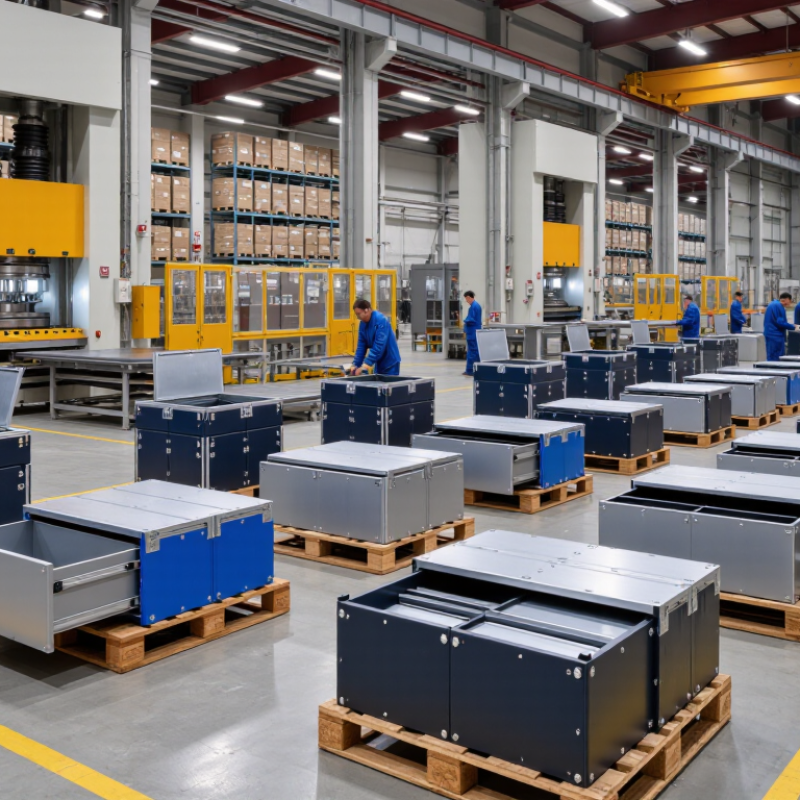
China Top Portable Metal Tool Box Manufacturers?

Portable Metal Tool Box Types, Materials, and China Market Data

China’s portable metal tool box market serves automotive repair, construction, maintenance, and household storage. Common types include cantilever boxes, deep tool chests, drawer units, and compact cases with removable trays. Steel remains the main material because it resists impact and supports heavier tools. Aluminum offers lower weight and better corrosion resistance, while stainless steel suits humid or demanding workplaces.

Market data requires careful reading. Chinese customs statistics often combine tool boxes with broader metal storage products, making exact category figures difficult to verify. In recent supplier quotations, standard steel boxes commonly range from 0.6 to 1.2 millimeters in thickness. Typical production lead times run from 25 to 45 days, depending on tooling, finish, and order volume. Major manufacturing activity is concentrated in coastal industrial areas, where stamping, welding, powder coating, and packaging suppliers work closely together. However, a polished sample does not prove stable mass production.

Tips: Ask for material certificates, load tests, salt-spray results, and factory inspection records. Check hinge alignment after repeated opening. Request production samples, not only catalog photos. Powder coating is practical, but poor edge coverage can expose rust early. That detail is easy to miss. Compare carton strength, replacement parts, and quality-control records before choosing a Chinese manufacturer.

China Portable Metal Tool Box Manufacturers: Types and Material Comparison

Portable metal tool boxes manufactured in China commonly include hand-carry boxes, cantilever boxes, drawer chests, and lockable storage cases. The chart compares the engineering weight of a 1 m² sheet with a thickness of 1 mm, calculated from standard material density values.

Carbon steel and galvanized steel provide high rigidity and impact resistance, while aluminum reduces product weight. Stainless steel offers strong corrosion resistance but has the highest sheet weight among the materials shown.

Key Specifications: Load Capacity, Steel Thickness, Size, and ASTM B117 Testing

China Top Portable Metal Tool Box Manufacturers?

When evaluating portable metal tool box manufacturers in China, focus on measurable specifications rather than polished catalogs. Load capacity should reflect real workshop use, including uneven weight and repeated opening. Ask whether the stated limit covers the box, tray, and handle together. A box rated for 30 kilograms may perform poorly if the weight sits near one side.

Steel thickness also deserves careful checking. Many suppliers quote nominal thickness, while painted edges and folded panels can create confusing measurements. Request gauge readings from the lid, base, and corners. Around 0.6 to 1.0 millimeters may suit general hand tools, but heavier equipment needs stronger reinforcement. Size must include usable internal space, not only external dimensions. Hinges, latches, and removable trays reduce capacity.

Details matter here. During factory reviews, inspect weld consistency, lid alignment, handle rivets, and sharp edges. Small defects become obvious after transport. Manufacturers should provide ASTM B117 salt spray test records for coated steel components. This test helps compare corrosion resistance under controlled conditions. It does not predict exact outdoor service life. Humidity, scratches, and poor drainage still change results. Ask for sample identification, exposure hours, and laboratory information. A report without traceable details is weak evidence. I have seen attractive boxes fail at the hinge before the steel showed serious corrosion. Supplier selection needs testing, samples, and honest limits.

China Top Portable Metal Tool Box Manufacturers — Key Specifications: Load Capacity, Steel Thickness, Size, and ASTM B117 Testing

Reference Configuration Typical Application Material & Steel Thickness External Size
(L × W × H)
Recommended Working Load Surface Finish ASTM B117 Test Plan Inspection Notes
Compact Portable Box Household tools, electrical accessories, service kits Cold-rolled carbon steel
0.60–0.80 mm
400 × 200 × 180 mm 15–20 kg, evenly distributed Powder coating, typically 60–100 μm dry-film thickness Neutral salt spray in accordance with ASTM B117; exposure duration and acceptance criteria to be specified in the purchase order Check lid alignment, hinge operation, sharp edges, coating coverage, and corrosion at scribe lines
Two-Tier Portable Box Automotive maintenance and general workshop tools Cold-rolled carbon steel
0.70–0.90 mm
500 × 250 × 250 mm 25–30 kg, evenly distributed Powder-coated exterior with formed or reinforced edges ASTM B117 exposure commonly selected by the buyer, such as 240–500 h, with rating based on documented visual inspection Verify tray movement, handle fastening, latch retention, weld quality, and permanent deformation after loading
Heavy-Duty Cantilever Box Professional mechanics, maintenance teams, and field service Cold-rolled carbon steel
0.80–1.00 mm
550 × 280 × 300 mm 35–45 kg, evenly distributed Powder coating; zinc-plated or stainless-steel hardware may be specified separately ASTM B117 testing with a buyer-defined exposure period; report chamber conditions, interruptions, specimen orientation, and corrosion observations Inspect cantilever arms, rivets, hinges, handle ergonomics, load distribution, and coating damage around fasteners
Large Industrial Box Industrial maintenance, construction, and mobile equipment storage Cold-rolled carbon steel
1.00–1.20 mm
650 × 350 × 350 mm 50–70 kg, evenly distributed Powder coating with reinforced base and corner protection ASTM B117 neutral salt spray; acceptance should distinguish general surface rust from creepage at a defined scribe according to the agreed evaluation method Confirm base rigidity, cover overlap, closure security, weld continuity, dimensional tolerance, and corrosion protection on hidden surfaces
Weather-Resistant Field Box Outdoor service, utilities, telecommunications, and emergency repair kits Galvanized steel or coated carbon steel
0.80–1.20 mm
600 × 300 × 300 mm 35–55 kg, evenly distributed Zinc-rich pretreatment plus powder coating; gasket and stainless or plated hardware as specified ASTM B117 is used as a comparative corrosion test; it does not by itself define product service life or a universal pass/fail requirement Check gasket compression, drainage, latch sealing, coating adhesion, galvanic compatibility, and corrosion near cut edges

Note: Load capacities are recommended working-load ranges for evenly distributed contents and should be confirmed through supplier testing. ASTM B117 specifies a controlled salt-spray exposure method; test duration, specimen preparation, rating method, and acceptance limits must be agreed between the buyer and supplier.

China’s Manufacturing Clusters and Export Metrics by HS Product Categories

China’s portable metal tool box supply base is concentrated around practical hardware clusters. Yongkang in Zhejiang supports stamping, welding, and latch production. Ningbo adds strong port access and contract metalwork. Guangdong and Jiangsu offer larger sheet-metal capacity, coating lines, and packaging suppliers.

The classification is messy. China Customs and ITC Trade Map commonly place metal tool boxes under HS 7326.90, while some designs may enter HS 4202.99 or HS 8205. Buyers should verify the code with customs specialists.

ITC Trade Map data, based on 2023 reporting, shows China exporting roughly US$15 billion under HS 7326.90. This figure covers many iron and steel articles, not tool boxes alone. That limitation matters.

Look beyond export value. A reliable factory should provide material certificates, load-test records, coating thickness results, and carton-drop testing.

A 0.8-millimeter steel body feels different from a 0.6-millimeter body, especially around hinge corners. Check drawer alignment by opening every sample, not only the best one.

Factories near Yongkang may offer faster tooling changes, while coastal suppliers can simplify container consolidation.

Some exporters quote excellent prices but hide inspection costs. That is a sourcing weakness.

Verify production capacity through recent shipment records, audit reports, and independent pre-shipment inspection. UN Comtrade and ITC data are useful starting points, but they cannot prove factory quality.

Top Manufacturer Evaluation: ISO 9001, GB/T 19001, MOQ, and Lead Times

China Top Portable Metal Tool Box Manufacturers?

Evaluating portable metal tool box manufacturers requires more than checking product photos. I inspect the factory’s ISO 9001 certificate, registration number, issuing body, and validity dates. The certified scope should cover metal fabrication, assembly, or tool storage production. GB/T 19001 certification is also relevant in China, but buyers should verify its current scope independently. A certificate alone cannot prove consistent workmanship.

During factory visits, I examine stamping presses, welding stations, powder-coating lines, and inspection records. A practical sample test includes hinge alignment, latch force, handle load, and coating adhesion.

Small details matter. One supplier used strong steel but poorly fitted corner seams. That issue appeared only after repeated opening and closing. My evaluation was not perfect because the first sample used different hardware than the proposed production model.

MOQ affects both price and flexibility. A lower MOQ may suit a trial order, yet it can increase unit costs or limit customization. Ask whether the quoted MOQ includes color, logo, foam inserts, and packaging changes. Lead times should be separated into sampling, material preparation, production, and final inspection. For standard boxes, production may take several weeks; customized orders usually require more time. Request a written schedule with buffer days, because holidays, material shortages, and rejected batches can disrupt optimistic promises.

OEM Supplier Comparison Using Defect Rates, Certifications, and Cost Data

China Top Portable Metal Tool Box Manufacturers?

When comparing Chinese OEM suppliers, defect rates deserve more attention than catalog prices. Ask for 12 months of inspection records, not one attractive sample. Review rejected units per million, first-pass yield, and the top three failure causes. Typical risks include sharp edges, weak hinge rivets, uneven powder coating, and drawer misalignment. The ISO Survey 2023 reported over 1.26 million valid ISO 9001 certificates worldwide, but certification alone does not prove low defects. An audited process can still produce inconsistent batches.

Certifications should match your risk. Request ISO 9001, material certificates, coating test results, and calibrated inspection records. For steel boxes, verify thickness at several points with a micrometer. Cost comparisons should separate steel, stamping, welding, coating, packaging, tooling, and freight. Use monthly steel-price references from the World Bank Commodity Markets Outlook rather than trusting a fixed quotation. Supplier cost sheets often omit rework and replacement parts. That gap matters. I have seen a cheaper quote become expensive after damaged corners appeared in transit. The comparison is not perfect, because suppliers measure defects differently.

Tips: Define one defect standard. Require a pre-shipment sample. Check at least 80 units. Record cosmetic and functional failures separately. A supplier reporting zero defects may sound excellent, but it may also reveal weak inspection discipline. Ask for photographs, batch numbers, corrective-action reports, and an independent audit before approving production.

Back To Top