
Skip to content

Why Choose a CNC Nesting Machine for Your Business?

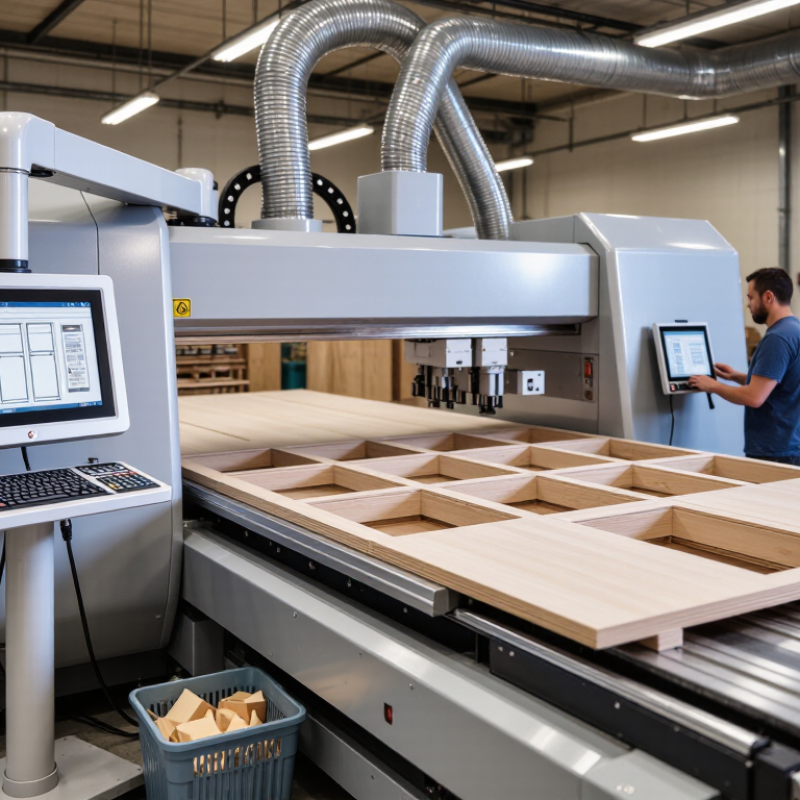
Choosing the right machinery can shape a workshop’s productivity, accuracy, and long-term operating costs. A Cnc Nesting Machine offers a practical way to cut panels efficiently while reducing material waste. It uses digital cutting paths to arrange cabinet parts, furniture components, or decorative panels across one sheet. Every millimeter matters.

In a busy workshop, operators can load a board, verify the design, and begin cutting with consistent results. Automated nesting helps place more parts on each panel. This may lower scrap rates and reduce repeated manual measurements. Cleaner cuts can also simplify edge banding and assembly. However, performance depends on more than the machine itself. Software quality, spindle power, dust extraction, and operator training all influence the final result.

Real experience shows that productivity gains are not always immediate. New users may need time to understand tool settings, cutting speeds, and file preparation. A poorly organized workflow can weaken an excellent machine’s advantages. That is an important limitation. Businesses should compare workpiece sizes, production volume, available floor space, and maintenance support before investing. Reliable suppliers should provide technical guidance, training, and accessible replacement parts. They should also explain realistic tolerances rather than promising perfect results.

When matched with suitable materials and clear production goals, a Cnc Nesting Machine can improve repeatability and workflow control. It may support higher output without simply adding more labor. The best choice is not always the most expensive model. It is the machine that fits daily work, staff capability, and future plans. Careful evaluation creates stronger value.
Why Choose a CNC Nesting Machine for Your Business?

What Is a CNC Nesting Machine and How Does It Work?

A CNC nesting machine is a computer-controlled cutting system for sheet materials such as plywood, MDF, and plastic. It combines a cutting bed, spindle or knife, motion motors, and nesting software. The operator imports a CAD drawing and enters the sheet’s exact dimensions. The software places multiple parts on one sheet, reducing unused space. This layout is called nesting.

The controller then converts each toolpath into movement instructions. Motors guide the cutter along the X, Y, and Z axes. The machine may drill holes, cut profiles, and create small holding tabs. Dust extraction keeps the working area clearer and protects moving components. Keep this part clean.

For a cabinet or furniture workshop, the process reduces manual measuring and repeated marking. It can improve consistency when many identical panels are required. Material savings depend on part shapes, grain direction, and layout settings. A badly entered sheet size can create expensive waste. Small errors multiply.

In daily operation, an experienced operator checks the drawing before cutting. They also inspect tool sharpness, bed alignment, and dust collection. Speed is not everything. The first layout is rarely perfect, and that is normal. Some materials need slower cutting or different tools. Businesses should test a small batch before changing regular production. That trial can reveal splintered edges, tight joints, or missing drilling details. A practical workflow leaves room for correction.

Which Business Challenges Can CNC Nesting Technology Solve?

A CNC nesting machine addresses a common workshop problem: too much material lost between parts. Instead of placing panels by eye, software arranges components within a measured sheet. The cutter follows a programmed path, reducing repeated measuring and manual marking. Waste becomes visible. Offcuts can be tracked, although irregular pieces are not always reusable. Not every offcut helps. This creates a clearer record of material use and supports more dependable purchasing decisions.

Production teams also face inconsistent output when several operators handle the same order. Nesting technology stores dimensions, tool settings, and cutting sequences in a controlled workflow. That consistency helps when making cabinets, doors, furniture panels, or small custom batches. It can also shorten setup time for repeated jobs. In practice, results depend on accurate drawings, sharp tools, and stable sheet handling. A poorly maintained vacuum table can still cause movement and ruined panels.

The technology can relieve labor pressure without removing human judgment. An operator checks the layout, confirms grain direction, and reviews the toolpath before cutting. This reduces costly surprises near the machine. One early improvement may expose another weakness: disorganized design files can slow production. Clear file naming and routine maintenance remain necessary. That matters. Operators can compare planned sheets with actual material consumption after each job.

What Materials and Products Can a CNC Nesting Machine Process?

A CNC nesting machine is designed to process large sheets efficiently, especially when several parts share one cutting layout. In practical production, common materials include plywood, MDF, particleboard, melamine panels, and laminated boards. Some machines can also cut acrylic, PVC sheets, foam board, and selected composite materials. Each material requires suitable tooling, cutting speed, and dust control.

These machines produce cabinet sides, shelves, drawer components, doors, wall panels, desks, and display fixtures. They can also cut irregular shapes for signage, partitions, and interior decoration. A nesting program may place dozens of parts on one sheet, reducing manual measuring and material waste. Small holes, grooves, labels, and assembly marks can be added during the same cycle.

Material behavior still matters. Laminated boards may chip at the edges. Plywood can contain uneven layers or hidden voids. Moisture may also change cutting results. Even experienced operators need test cuts. A setting that works on MDF may damage acrylic or melt plastic. That is an easy mistake to make.

Reliable production depends on accurate sheet measurement, sharp tools, stable vacuum holding, and effective dust extraction. Before purchasing, check the machine’s working area, spindle power, tool compatibility, software support, and service response. Metal cutting is usually outside the normal scope of nesting equipment, unless the machine is specifically engineered for it.

Why Choose a CNC Nesting Machine for Your Business? - What Materials and Products Can a CNC Nesting Machine Process?

Material Category Common Sheet or Panel Products Typical CNC Nesting Operations Typical Thickness Range* Common Finished Products Processing Considerations
MDF Standard MDF, moisture-resistant MDF, lightweight MDF Profiling, drilling, grooving, pocketing, engraving and edge shaping 3–30 mm Cabinet parts, doors, shelving, furniture components, display panels Produces a consistent machined edge; dust extraction and suitable carbide tooling are important.
Particleboard Raw chipboard, furniture board, melamine-faced particleboard Cutting, boring, hinge drilling, dadoing and nesting of cabinet components 12–25 mm Kitchen cabinets, wardrobes, office furniture, storage units Surface coatings can chip if feed rates, tool geometry and cutting direction are not matched to the panel.
Plywood Hardwood plywood, softwood plywood, birch plywood, marine plywood Contour cutting, drilling, slotting, pocketing and profile machining 3–30 mm Furniture, shelving, crates, partitions, toys and interior components Layer construction and veneer quality affect edge finish, tear-out and tool life.
Solid Wood Panels Planed boards, edge-glued panels and laminated timber panels Rough and finish profiling, mortising, drilling, carving and joinery preparation 10–50 mm Tabletops, cabinet doors, furniture parts, stair components and decorative panels Grain direction, moisture content and workholding influence dimensional accuracy and surface quality.
Laminated and Coated Panels Melamine-faced boards, veneer panels, high-pressure laminate-faced boards Panel sizing, cabinet-part nesting, hinge boring, grooving and drilling 6–30 mm Flat-pack furniture, kitchen units, office partitions and retail fixtures Scoring or compression tooling may reduce chipping on decorative surfaces.
Acrylic and PMMA Clear, colored, frosted and mirror acrylic sheets Contour cutting, drilling, pocketing, lettering and edge finishing 1–25 mm Signs, point-of-sale displays, light diffusers, guards and decorative parts Chip evacuation, proper spindle speed and sharp tools help prevent melting and stress cracking.
PVC and Foam Board Rigid PVC sheets, expanded PVC foam board and sign substrate Cutting, drilling, engraving, pocketing and lettering 1–30 mm Signage, exhibition panels, templates, covers and lightweight fabricated parts Heat buildup can deform the material; ventilation and suitable cutting parameters are required.
Engineering Plastics HDPE, UHMW-PE, acetal and polycarbonate sheets Profile cutting, drilling, slotting, pocketing and prototype machining 2–40 mm Wear strips, guards, jigs, machine covers, packaging parts and prototypes Material flexibility and heat sensitivity require secure vacuum holding and controlled feeds.
Composite Panels Aluminum composite panels, honeycomb panels and fiber-reinforced sheets Panel trimming, V-grooving, contour cutting, drilling and folding preparation 2–10 mm Building cladding, sign panels, partitions, covers and interior fit-out parts Tool selection must suit both the skin and the core; dust and chips should be effectively extracted.
Non-Ferrous Metals Aluminum sheet, aluminum plate, brass and copper sheet Light profiling, drilling, engraving and shallow pocketing 0.5–10 mm Signs, nameplates, panels, brackets and light-duty fabricated components Requires a machine rated for metal cutting, appropriate tooling, lubrication or mist control, and rigid workholding.
Insulation and Model-Making Materials Foam board, polyurethane foam, EPS and modeling board 3D contouring, roughing, profiling, pocketing and model production 10–150 mm Patterns, molds, prototypes, architectural models and insulation components Low-density materials cut quickly but may require reduced vacuum pressure and specialized dust collection.
Technical Laminates Phenolic panels, compact laminate and glass-fiber laminate sheets Profiling, drilling, slotting, cutouts and component nesting 2–20 mm Laboratory furniture, worktops, electrical parts, partitions and wear-resistant components Abrasive dust can accelerate tool wear; carbide or diamond tooling and effective extraction may be necessary.

*Thickness ranges are illustrative and depend on machine power, spindle capacity, tooling, vacuum holding, material density, sheet size and the required edge quality. Always confirm compatibility with the machine manufacturer and the material supplier before production.

What Are the Main Business Benefits of CNC Nesting Machines?

Why Choose a CNC Nesting Machine for Your Business?

A CNC nesting machine can reduce material waste, labor time, and production delays. It arranges multiple parts on one sheet before cutting begins. This improves sheet utilization and makes job planning more predictable. Less waste. That matters when plywood, MDF, or plastic prices rise.

In a busy workshop, operators can load a prepared file and repeat accurate cuts throughout the day. Consistent sizing reduces manual measuring and lowers the risk of assembly problems. Automated cutting also helps small teams handle custom orders without adding another full-time operator. I have found that clear labeling and organized part removal are just as important as cutting accuracy. A fast machine cannot fix a confusing workflow.

The financial benefit depends on several practical factors.

Sheet thickness, tooling costs, software quality, maintenance, and operator training all affect real returns. It is not magic. Poorly prepared files still create poor results. Regular spindle checks, dust removal, and calibration protect accuracy over time. Businesses should compare actual sheet usage and labor hours before and after installation. A short trial can reveal bottlenecks that sales figures often hide. Safety procedures also require attention, especially around dust extraction and moving components. When production data is reviewed honestly, the machine can support faster delivery, steadier quality, and more controlled operating costs.

How Should You Evaluate a CNC Nesting Machine for Your Business?

Evaluating a CNC nesting machine starts with your actual production needs, not its advertised speed. Measure your common sheet sizes, material types, daily workload, and required cutting accuracy. A machine with a large working area may waste floor space if your orders are small. I once underestimated setup time, and the promised output quickly became unrealistic.

Check the spindle power, cutting speed, vacuum strength, and dust extraction system. These details affect edge quality, tool life, and operator safety. Ask the supplier for test cuts using your own plywood, MDF, or composite panels. Inspect the finished edges closely. Look for burning, chipped corners, and uneven grooves. Small defects become expensive during assembly.

Software compatibility also matters. Confirm whether the control system handles your design files and supports automatic toolpath planning. Review training, maintenance response, spare parts, and warranty conditions in writing. A reliable evaluation includes total operating cost, not only the purchase price. Calculate electricity, tooling, labor, and downtime over several years. Speak with experienced operators when possible; their practical feedback may reveal vibration, difficult cleaning, or confusing controls. The evaluation is not perfect, because future orders can change. Leave room for new materials and revised production methods.

Back To Top