
2026 Best Large CNC Machine Types for Global Buyers
Buying a large cnc machine in 2026 requires more than comparing spindle power and table length. Global buyers must connect machine design with production reality, workforce skills, floor conditions, and service access. A five-meter bed may look impressive, yet it can waste valuable space when most parts are smaller. The right choice begins with actual workpieces. Measure their dimensions, materials, tolerances, weight, and batch frequency. Then match those facts to the machine’s travel, load rating, control system, and automation options.
This guide examines large CNC machine types used across metalworking, woodworking, composite, and specialized fabrication environments. It considers gantry mills, bridge mills, large turning centers, CNC routers, and hybrid platforms. Each type has practical strengths and uncomfortable compromises. Gantry systems offer broad coverage, but foundation accuracy matters. Large lathes handle heavy shafts, yet loading equipment can increase total investment. Routers may deliver speed on panels, while dust control and tool rigidity demand close attention. These details affect uptime more than brochure language.
Reliable purchasing also depends on evidence. Review verified case studies, machine acceptance procedures, operator feedback, maintenance records, and regional support capability. Ask how calibration is documented and how spare parts are delivered. Local voltage, safety requirements, installation limits, and training should be checked before signing. No ranking fits every factory. That is worth admitting. Some published specifications remain difficult to compare, and supplier claims require careful verification. The following overview offers a practical framework for choosing confidently, while leaving room for site-specific testing and expert review.
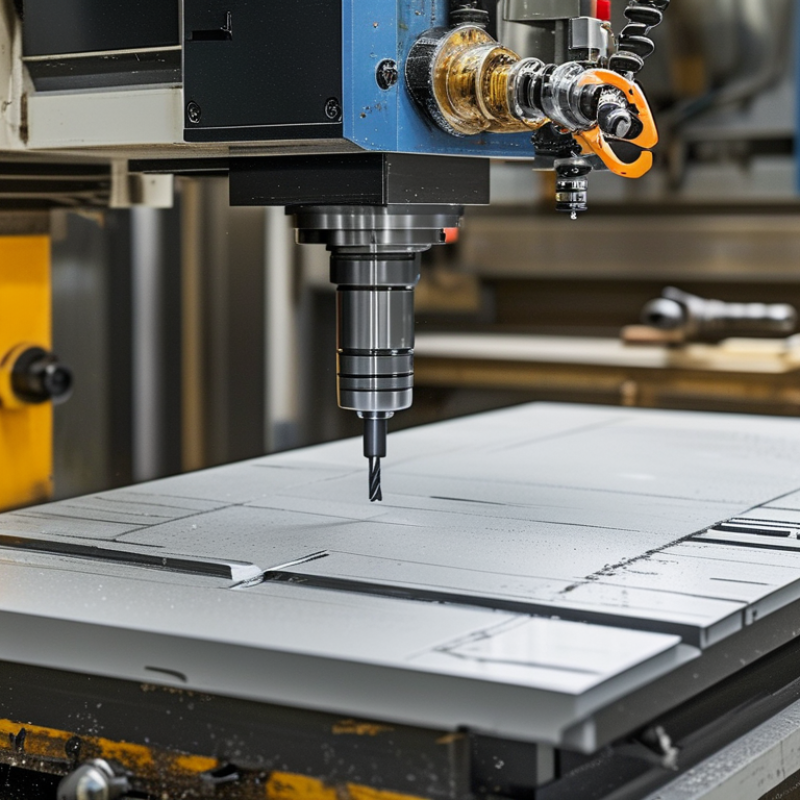
Large CNC Machines: Definition, Scale, and Industrial Applications
Large CNC Machines: Definition, Scale, and Industrial Applications
Large CNC machines are computer-controlled systems built to process oversized, heavy, or unusually long workpieces. Their size has no single global standard. In practice, buyers often assess table length, working width, vertical clearance, spindle power, and maximum load. A machine with a six-meter table may suit long steel frames, while a wider gantry machine may handle aerospace panels or composite molds. Floor space matters too. So does foundation strength.
These machines support shipbuilding, rail transport, energy equipment, construction machinery, and industrial mold production. A gantry mill can cut a steel base with controlled passes and stable coolant flow. A large lathe can turn shafts several meters long, but alignment becomes increasingly sensitive as length grows. Cutting accuracy depends on thermal control, tooling, material stress, and operator setup. Bigger is not automatically better. Oversized equipment can waste energy and create maintenance costs when the workpiece is modest.
Tips: Measure the largest real workpiece, not an ideal future order. Check loading paths, door height, crane capacity, and electrical requirements before purchase. Ask for tested accuracy under a similar load. Review service access and replacement-part availability. A common mistake is focusing only on maximum travel. That figure may ignore fixture space, tool length, or safe operator clearance. Leave room for practical errors. Because production conditions are rarely perfect.
| CNC Machine Type | Basic Definition | Typical Working Envelope | Typical Axis Configuration | Typical Workpiece Capacity | Common Accuracy Range | Suitable Materials | Primary Industrial Applications | Key Advantages | Important Buyer Considerations |
|---|---|---|---|---|---|---|---|---|---|
| Large Gantry Machining Center | A fixed or moving-gantry milling machine designed to machine large components from multiple sides. | X: 3–30 m Y: 2–8 m Z: 1–3 m |
3-axis, 4-axis, or 5-axis; dual columns and optional rotary tables are common. | Approximately 5–100 tonnes, depending on table construction and foundation design. | Positioning accuracy commonly about 0.02–0.10 mm per meter; final results depend on thermal control and machine setup. | Steel, stainless steel, cast iron, aluminum, titanium, composites, and engineered plastics. | Construction machinery frames, ship components, energy equipment, aerospace structures, rail vehicles, and large molds. | Large travel range, strong structural rigidity, flexible tooling, and efficient multi-face machining. | Check floor space, foundation requirements, gantry clearance, chip evacuation, spindle torque, and service access. |
| Bridge-Type Machining Center | A high-rigidity machine with a bridge spanning the worktable, typically used for precision milling of broad or tall parts. | X: 2–20 m Y: 1.5–6 m Z: 0.8–2.5 m |
3-axis to 5-axis; fixed bridge or moving bridge designs are available. | Approximately 2–60 tonnes, with table loads determined by the machine structure. | Typically about 0.015–0.08 mm per meter for positioning, subject to temperature and calibration conditions. | Steel, aluminum, cast iron, nickel alloys, composites, and mold steels. | Die and mold production, aerospace tooling, automotive body tooling, heavy equipment, and precision structural parts. | Good vibration control, stable cutting, high surface quality, and strong performance on wide workpieces. | Evaluate bridge rigidity, cross-rail design, spindle head reach, thermal compensation, and tool-change clearance. |
| Floor-Type Boring and Milling Machine | A large horizontal boring mill with a separate floor plate or modular table for machining oversized and heavy components. | X: 3–20 m Y: 2–8 m Z: 1.5–5 m W: 0.8–2 m |
Typically 3-axis or 4-axis, with a horizontal spindle and optional rotary table. | Approximately 10–300 tonnes or more with engineered foundations and modular fixtures. | Commonly about 0.03–0.15 mm per meter; boring accuracy depends strongly on spindle alignment and workholding. | Cast iron, carbon steel, stainless steel, alloy steel, and large welded fabrications. | Power-generation equipment, mining machinery, shipbuilding, pressure vessels, heavy transport, and industrial gearboxes. | Excellent access to deep bores, large sidewalls, and heavy parts; suitable for one-setup machining. | Review column travel, spindle diameter, boring-bar support, floor loading, foundation design, and part handling. |
| Large Horizontal Machining Center | A horizontal-spindle CNC machine that uses a pallet or tombstone system for multi-face machining of large parts. | X: 1.5–6 m Y: 1–3 m Z: 1–2.5 m |
3-axis or 4-axis; pallet changers and rotary tables are common. | Approximately 1–30 tonnes per pallet, depending on pallet size and rotary-table capacity. | Typically about 0.02–0.08 mm per meter under controlled operating conditions. | Steel, cast iron, aluminum, stainless steel, and nickel-based alloys. | Engine housings, hydraulic components, transmission cases, pump bodies, industrial machinery, and structural modules. | Efficient chip evacuation, strong side cutting, reduced refixturing, and good production repeatability. | Consider pallet size, spindle power, automatic fixture management, chip handling, and loading logistics. |
| Large Vertical Turning Lathe | A CNC turning machine with a horizontal rotary table that supports large-diameter, relatively short workpieces. | Turning diameter: 1.5–15 m Turning height: 1–8 m |
2-axis to 4-axis; live tooling, milling heads, and dual rams may be included. | Approximately 5–500 tonnes, depending on table diameter and bearing capacity. | Typical turning accuracy is about 0.02–0.10 mm, depending on diameter, temperature, tooling, and workholding. | Steel, cast iron, stainless steel, titanium, nickel alloys, and non-ferrous metals. | Wind-turbine components, power-generation parts, bearings, valves, ship propellers, gears, and large flanges. | Excellent support for heavy circular parts, low loading height, and efficient face and diameter turning. | Check table load, table speed, ram rigidity, chuck or fixture design, swarf removal, and crane access. |
| Large Horizontal CNC Lathe | A turning center with a horizontal spindle for machining long shafts, cylinders, pipes, and rotational components. | Swing over bed: 1–5 m Turning length: 3–30 m Spindle bore: 100–1,000 mm |
2-axis to 4-axis; steady rests, tailstocks, and driven tools may be used. | Approximately 1–100 tonnes between centers, depending on bed length and support equipment. | Typical turning accuracy is about 0.02–0.12 mm over the working length. | Carbon steel, alloy steel, stainless steel, cast iron, aluminum, brass, and nickel alloys. | Oil and gas tubular components, shafts, rollers, cylinders, shipbuilding parts, and heavy industrial couplings. | Suitable for long workpieces, large bores, heavy roughing, and continuous turning operations. | Assess bed stiffness, spindle bore, steady-rest capacity, tailstock thrust, bar handling, and chip management. |
| Large 5-Axis Gantry Machine | A gantry-based CNC machine with simultaneous or indexed five-axis movement for complex large components. | X: 3–25 m Y: 2–8 m Z: 1–4 m |
Five-axis head, two-axis rotary head, or a combination of rotary table and swivel head. | Approximately 2–80 tonnes, depending on table, fixture, and dynamic cutting requirements. | Typical volumetric accuracy is about 0.03–0.15 mm before application-specific compensation and verification. | Aluminum, titanium, aerospace alloys, steel, composites, model board, and mold materials. | Aerospace skins, aircraft structures, marine propellers, turbine components, large molds, and complex energy parts. | Fewer setups, improved access to complex surfaces, reduced fixture interference, and better contour continuity. | Review rotary-axis torque, collision avoidance, CAM compatibility, machine dynamics, calibration, and operator expertise. |
| Large CNC Router | A high-speed gantry machine using a router spindle for cutting large sheets, panels, molds, and lightweight structural parts. | X: 2–20 m Y: 1.5–6 m Z: 0.2–1 m |
3-axis or 4-axis; 5-axis configurations are used for specialized contour work. | Usually up to 1–5 tonnes on the table, with vacuum tables commonly used for sheet materials. | Typical positioning accuracy is about 0.05–0.30 mm, depending on machine size and material handling. | Wood, MDF, plastics, aluminum, composite panels, foam, honeycomb panels, and non-ferrous materials. | Cabinetry, transportation interiors, marine panels, advertising structures, architectural components, and composite tooling. | High cutting speed, large sheet capacity, relatively low operating cost, and efficient nesting workflows. | Check spindle speed range, dust extraction, vacuum zoning, gantry acceleration, table flatness, and material hold-down. |
| Large CNC Waterjet Cutting Machine | A CNC cutting system that uses a high-pressure water stream, with or without abrasive, to cut large flat materials without a heat-affected zone. | X: 3–12 m Y: 2–6 m Z: 0.2–0.6 m |
2-axis to 5-axis cutting head; multiple cutting heads may be installed. | Commonly handles sheets and plates from several hundred kilograms to multiple tonnes. | Typical cutting tolerance is about ±0.08–0.30 mm, depending on thickness, nozzle condition, speed, and material. | Steel, stainless steel, aluminum, copper, glass, stone, ceramics, rubber, composites, and layered materials. | Metal fabrication, stone processing, aerospace composites, architectural panels, glasswork, and heavy-equipment components. | No thermal distortion, broad material compatibility, narrow kerf, and useful performance on thick or laminated materials. | Evaluate pump pressure, abrasive recycling, water treatment, cutting-bed corrosion protection, and consumable costs. |
| Large CNC Plasma Cutting Machine | A CNC thermal cutting system that uses a plasma arc to cut electrically conductive sheet and plate materials. | X: 3–30 m Y: 1.5–8 m Material thickness: approximately 1–150 mm |
Normally 2-axis or 3-axis; bevel heads and drilling units are optional. | Designed for large steel plates, commonly weighing several tonnes on a reinforced cutting table. | Typical cut accuracy is about ±0.3–1.0 mm, depending on thickness, cutting speed, torch condition, and calibration. | Mild steel, stainless steel, aluminum, and other electrically conductive metals. | Structural steel, shipbuilding, agricultural machinery, pressure equipment, bridges, and heavy fabrication. | High cutting speed, broad plate-size capability, and lower entry cost than many high-precision cutting systems. | Consider fume extraction, table water level, torch height control, bevel compensation, consumables, and plate loading. |
| Large CNC Laser Cutting Machine | A CNC sheet or plate cutting system that uses a focused laser beam for high-speed, precise cutting of suitable materials. | X: 3–15 m Y: 1.5–4 m Material thickness: approximately 0.5–50 mm, depending on material and power |
2-axis or 3-axis cutting head; tube and profile cutting modules may be integrated. | Typically processes plate loads from several hundred kilograms to several tonnes with automated handling. | Typical dimensional accuracy is about ±0.05–0.20 mm under stable thermal and operating conditions. | Carbon steel, stainless steel, aluminum, brass, copper, and selected alloys. | Automotive structures, sheet-metal fabrication, electrical enclosures, appliances, machinery, and architectural metalwork. | Fine kerf, high repeatability, low mechanical cutting force, and strong performance on thin to medium plate. | Review laser power, reflective-material capability, assist-gas consumption, extraction, safety enclosure, and thermal stability. |
| Large CNC Gear-Hobbing or Gear-Shaping Machine | A specialized CNC machine for producing large spur, helical, internal, or external gears with controlled tooth geometry. | Gear diameter: approximately 1–16 m Face width: 0.3–3 m |
Multi-axis synchronized rotation; commonly includes workpiece rotation, cutter rotation, and axial or radial feed. | Approximately 1–200 tonnes, depending on gear diameter, table capacity, and fixture design. | Typical finished gear quality ranges from industrial medium precision to high precision, often approximately ISO grade 7–10 depending on process and inspection. | Alloy steel, carburized steel, cast iron, stainless steel, and specialized gear materials. | Wind-turbine gearboxes, mining drives, marine transmissions, cement plants, rolling mills, and heavy industrial reducers. | Dedicated tooth-generation accuracy, repeatable production, and efficient manufacture of large transmission components. | Check maximum module, cutter diameter, tooth width, heat-treatment allowance, inspection equipment, and software support. |
| Large CNC Pipe and Tube Processing Center | A CNC system for cutting, drilling, beveling, threading, or profiling long pipes and structural tubular sections. | Pipe length: 6–24 m Diameter: approximately 50–1,500 mm |
2-axis to 6-axis, depending on cutting, drilling, beveling, and profile requirements. | Individual pipe loads commonly range from several hundred kilograms to more than 20 tonnes. | Typical length and feature accuracy is about ±0.2–1.0 mm, depending on tube diameter and processing method. | Carbon steel, stainless steel, aluminum, duplex steel, and alloy steel. | Pipeline fabrication, offshore structures, boilers, pressure vessels, construction, and process equipment. | Reduces manual layout work, supports long materials, and combines multiple tube-processing operations. | Assess tube support, rotary chuck capacity, alignment control, fume extraction, bevel quality, and loading automation. |
Related Posts
-
What Is a Large CNC Machine and How Does It Work?
-
10 Best CNC Machines for Precision Engineering in 2023
-
How to Choose the Right Machining Center for Your Workshop?
-
What is a CNC Machining Center and How Does it Benefit Manufacturing Industries
-
CNC Machining Center Tips for Beginners How to Get Started
-
Why Choose CNC Machines for Your Manufacturing Needs?