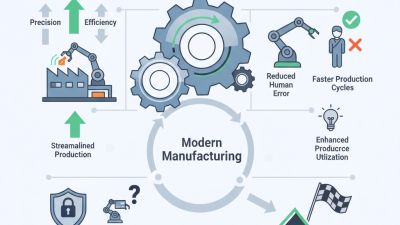
Selecting China’s best manufacturing automation suppliers requires more than comparing product catalogs. The right partner must fit your process, workforce, factory layout, and future expansion plans. A packaging line may need servo drives and vision inspection. A metalworking plant may prioritize robots, safety systems, and predictive maintenance.
China’s scale makes this market difficult to assess. The International Federation of Robotics reported 276,288 industrial robot installations in China during 2023. That represented more than half of global installations. China also reached approximately 470 robots per 10,000 manufacturing employees, according to World Robotics 2024. These figures show strong capability, but they do not prove that every supplier delivers dependable results.
Look beyond impressive demonstrations.
A credible supplier should provide traceable case studies, factory acceptance testing, spare-parts planning, and responsive engineering support. Review certifications such as ISO 9001 and relevant machinery safety standards. Ask how the supplier handles software updates, cybersecurity, downtime, and operator training. The Deloitte 2023 Smart Manufacturing and Operations Survey also highlights the importance of integrating people, processes, and technology, rather than purchasing isolated equipment.
Supplier selection should include measurable criteria. Compare cycle time, overall equipment effectiveness, integration costs, maintenance response, and total ownership cost. Visit a reference factory when possible. A polished showroom can hide practical weaknesses. No shortlist is perfect. Even experienced buyers can overvalue low prices or attractive specifications. This guide examines leading Chinese automation companies through performance, reliability, innovation, service coverage, and industry fit, helping manufacturers make a more informed decision.
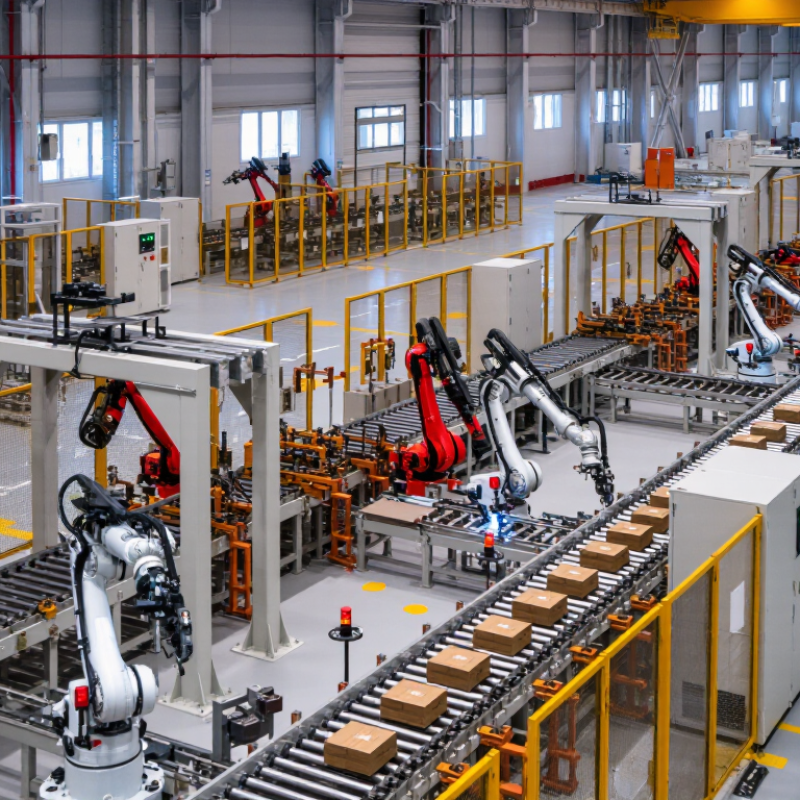
China’s manufacturing automation suppliers cover more than robot producers. The category includes motion-control equipment, sensors, programmable controllers, machine vision, industrial software, system integration, maintenance, and operator training. A capable supplier should connect these layers safely. It should also document cycle time, accuracy, energy use, and service response.
The market is substantial. The International Federation of Robotics reported 276,288 industrial robots installed in China during 2023, representing about 51% of global installations. Its World Robotics 2024 report also recorded China’s robot density at 470 units per 10,000 manufacturing employees. These figures indicate strong demand, but they do not prove that every supplier delivers reliable automation. Scope matters.
A supplier may sell hardware only, while another designs the complete production cell. The difference affects engineering responsibility, integration risk, spare parts, and worker training. In practical evaluation, buyers should inspect factory trials, software documentation, safety validation, and local technical support. Ask for measured results, not attractive demonstrations.
The boundary is not always clean.
A lower initial quote may hide expensive programming changes or slow maintenance. This is where supplier comparisons become difficult. Industry reports provide useful scale data, yet plant-level performance still depends on materials, layout, product variation, and workforce skills. That detail is easy to underestimate. A careful definition of supplier scope makes “best” more measurable, though never perfectly objective.
Chinese automation suppliers offer a broad product range for modern factories. Common solutions include programmable logic controllers, human-machine interfaces, servo motors, robotic arms, machine vision cameras, sensors, and industrial networking equipment. Many suppliers also provide conveyors, control cabinets, automated storage systems, and production-line integration. These products support assembly, packaging, inspection, material handling, and process monitoring.
Their key technologies often combine motion control, real-time data collection, and software-based production management. Some systems connect shop-floor equipment with SCADA or MES platforms, helping managers track cycle times, faults, energy use, and output quality. Safety functions may include emergency stops, protective sensors, and controlled access. Specification details matter. A compact servo system may perform well on a light assembly line but fail under continuous high-load conditions. The cheapest quotation is not always the most reliable choice. Documentation can also be uneven.
Tips: Request sample test results, wiring diagrams, maintenance schedules, and spare-parts lists. Check communication protocols, voltage requirements, response times, and integration support. Ask whether technicians can assist during installation and troubleshooting. Test a small production cell before expanding. It may reveal software gaps, unclear alarms, or training needs that brochures rarely mention. Suppliers with traceable quality procedures, clear technical records, and consistent after-sales communication are easier to evaluate and manage.
China’s manufacturing automation companies serve a wide range of industrial sectors. Automotive factories use robotic arms for welding, painting, and precise component assembly. Electronics plants depend on vision inspection, conveyor systems, and small-part placement equipment. These systems help reduce repetitive labor and improve production consistency.
Food and beverage manufacturers often install automated filling, sealing, labeling, and sorting lines. Stainless-steel surfaces support frequent cleaning and stricter hygiene routines. Pharmaceutical facilities require controlled handling, accurate dosing, and traceable production records. In practice, engineers must match automation designs with local safety procedures and international compliance requirements.
Warehousing and logistics companies use automated storage systems, scanners, and guided vehicles to move products efficiently. Metalworking factories apply CNC equipment, sensors, and robotic loading for heavy components. Textile producers also use automated cutting, stitching, and quality inspection systems. Renewable energy manufacturers need precise assembly for batteries, solar components, and power equipment. Results can vary. Poor training, weak maintenance plans, or unsuitable software may reduce the expected benefits. Experienced suppliers usually test production samples, document operating steps, and provide practical technical support before full deployment.
Selecting a reliable automation supplier requires more than comparing equipment prices. The International Federation of Robotics reported 541,302 industrial robots installed worldwide in 2023. This scale increases the need for capable integration, safety control, and long-term service. Ask suppliers for factory acceptance test records, commissioning plans, and measurable uptime targets. A polished demonstration proves little.
Technical depth matters. Review electrical drawings, software ownership, spare-parts lists, and cybersecurity procedures. Check whether technicians can respond within a defined time. Request references from factories with similar cycle times, materials, and production risks.
86% Deloitte’s 2023 Smart Manufacturing Survey found that 86% of executives expect smart manufacturing to become a key competitiveness driver within five years. That expectation makes weak data management a serious warning sign.
Test before expanding.
A limited pilot can expose hidden integration hours, unstable sensors, or difficult maintenance access. Require clear acceptance criteria, including cycle time, defect rate, energy use, and operator training. The lowest quotation may exclude essential work. It often does.
I would also question suppliers that promise perfect performance without explaining failure recovery. Reliable partners document assumptions, admit technical limits, and improve designs after real production feedback. Be strict, but stay practical.
China’s manufacturing automation sector is moving from isolated machine upgrades toward connected production systems. Factory managers now measure more than speed. They examine energy use, downtime, traceability, and worker safety. In a typical workshop, sensors record motor temperature while cameras inspect tiny surface defects. Data reaches a control room within seconds.
Artificial intelligence will support more flexible production. Instead of repeating one fixed process, robots can adjust to different components and order sizes. This matters for electronics, automotive parts, medical equipment, and other precision industries. Digital twins will also help engineers test layout changes before moving physical equipment. The savings can be substantial. However, poor data still produces poor decisions.
Smaller manufacturers may adopt modular systems rather than complete factory replacements. This approach lowers disruption and allows gradual training. Local automation suppliers will need stronger engineering support, clearer maintenance procedures, and verified cybersecurity practices. Standards-based communication will become increasingly important when machines from different vendors must cooperate. Human technicians will remain essential for calibration, troubleshooting, and ethical decisions about workplace monitoring.
The transition is not always smooth. Some pilot projects look impressive but fail during night shifts or peak demand. A practical assessment should include spare parts, software updates, operator skills, and five-year operating costs. Energy-efficient motors and predictive maintenance may deliver quieter, cleaner workshops, but only when staff trust the system and understand its limits. Progress will be uneven. That may be healthier than chasing impressive demonstrations.